LQG Closure Requirements for Hazardous Waste Accumulation Areas
LQG Closure Requirements for Hazardous Waste Accumulation Areas
Plan closure notifications, operating-record notices, decontamination, waste removal, performance standards, and evidence before an accumulation area is retired.
LQGs must address closure of central accumulation areas and facility closure under 40 CFR 262.17(a)(8). Choose the applicable notification or operating-record pathway, remove or decontaminate hazardous waste and residues, meet unit-specific closure conditions, manage closure wastes, and retain evidence that the performance standard was achieved.
Identify the closure event
Distinguish temporary shutdown, removal from service, closure of one accumulation unit, and closure of the entire facility. Record the unit boundary, history, construction, wastes, and planned future use.
Choose the unit-closure pathway
For a closed accumulation unit, the federal rule provides operating-record and notification options. Facility closure has advance and completion notifications and performance duties. Verify state forms and timing.
Plan characterization and decontamination
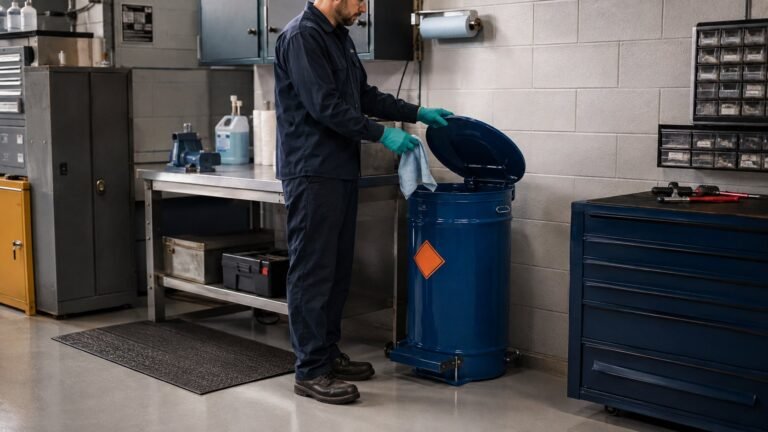
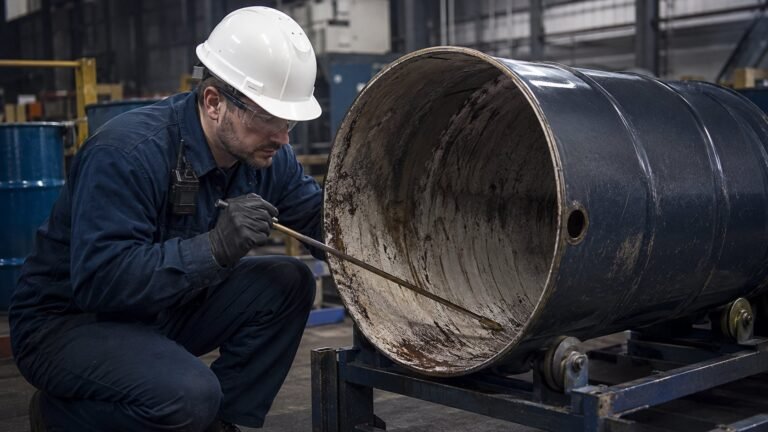
Identify residues, contaminated equipment, bases, soils, and debris; establish cleaning and sampling objectives; manage rinsate and debris; and document disposal or reuse decisions.
Worked example: retiring a container pad
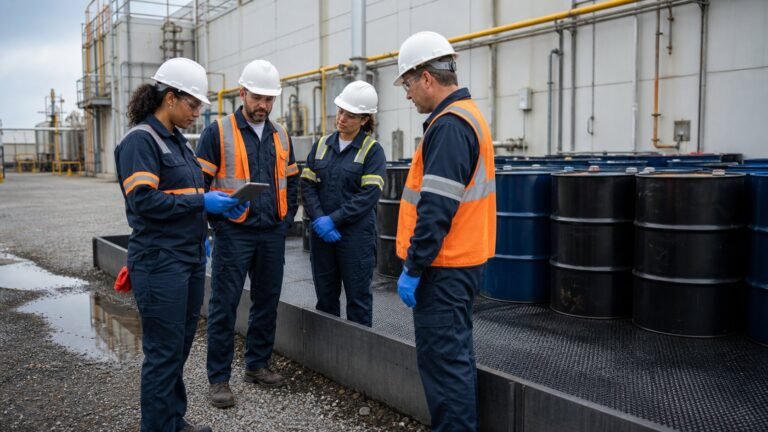
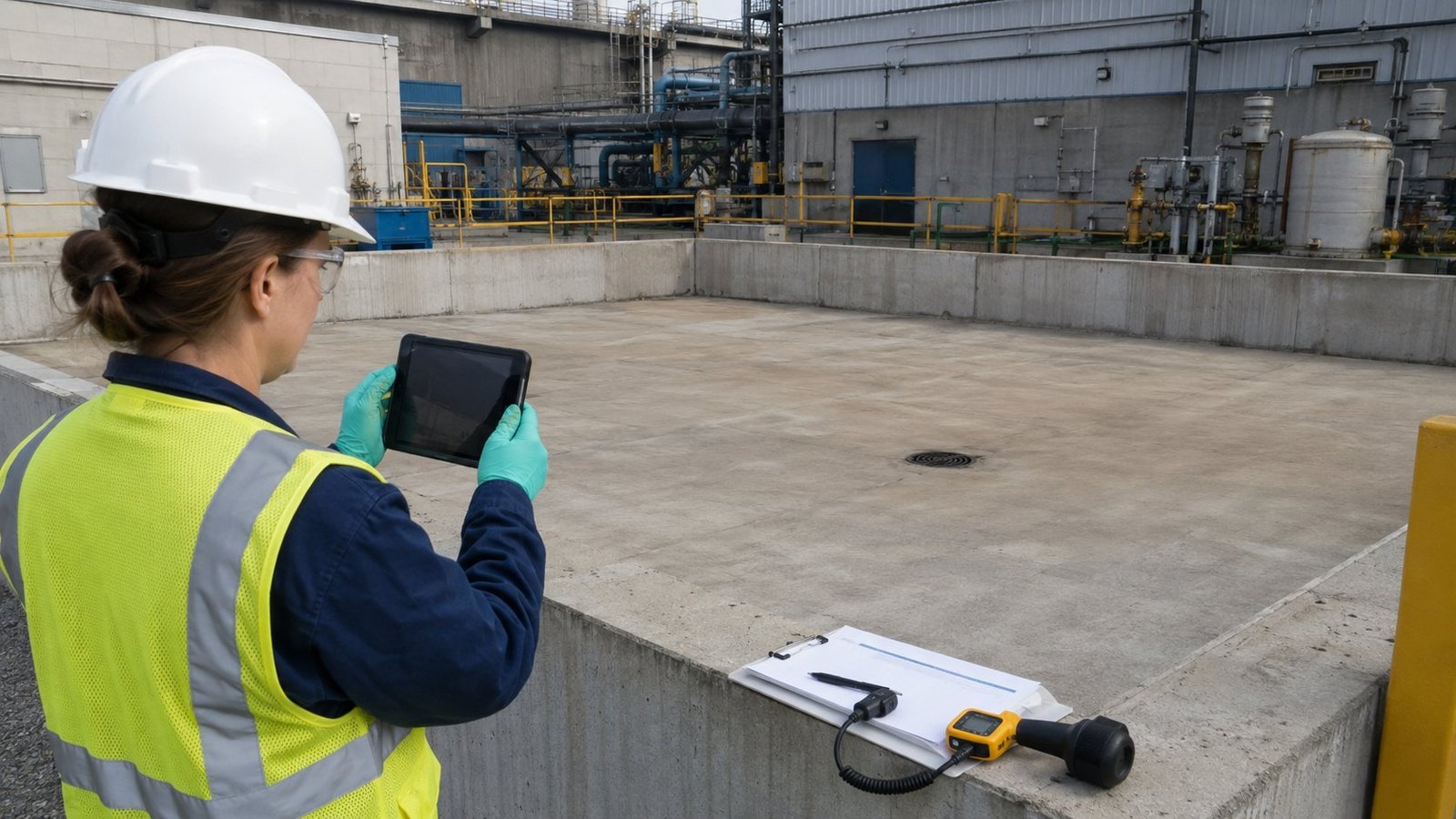
An LQG removes containers, inspects joints and curbing, characterizes stained concrete, cleans the area, manages cleaning waste, photographs the final condition, and places the required location notice and closure record in the operating file.
Prove completion
Retain notifications, maps, inventories, manifests, decontamination methods, analytical results, photographs, waste determinations, certifications, and approvals. Track reopened units through change control.
Put the requirement into daily work
Assign an accountable owner and translate the LQG closure requirements decision into a field standard. Identify who performs each step, who reviews exceptions, what training and equipment are required, and where evidence is retained. Test the workflow with a real facility example before broad use.
Connect environmental, operations, maintenance, laboratory, purchasing, shipping, emergency-response, and contractor roles where their decisions affect the outcome. Use clear acceptance criteria so the same facts produce the same decision.
Records and reevaluation triggers
Keep the current regulatory basis, facility analysis, approvals, operating records, and exception history under a stable identifier. A reviewer should be able to reconstruct what was known, who decided, how the control was implemented, and how ongoing performance was verified.
Reevaluate after changes in material, process, equipment, quantity, storage, handling, vendor, destination, permit, law, incident, inspection finding, analytical result, or recurring failure. Document both the trigger and the resulting decision.
Common mistakes
- Treating an idle area as automatically closed.
- Missing the distinction between unit and facility closure.
- Cleaning without a sampling or visual acceptance basis.
- Discarding closure residues without determinations.
- Failing to preserve unit-location records.
Field checklist
- Define the unit and closure type.
- Check federal and state notice timing.
- Create removal and decontamination criteria.
- Determine all closure wastes.
- Verify the performance standard.
- Retain maps, notices, evidence, and approvals.
Frequently asked questions
Do satellite areas require the same closure notice?
Can an accumulation area be returned to service?
Is clean concrete enough evidence?
Check your state rules
Authorized states may be more stringent, broader in scope, or use different adoption and reporting rules. Verify current requirements and agency interpretations in every applicable jurisdiction.
Primary sources
- 40 CFR 262.17(a)(8) – LQG closure
- EPA Generator Improvements Rule FAQs – Closure
- EPA Generator Compendium – LQG Closure
Federal sources reviewed September 7, 2026. Verify the current text and the rules adopted in your jurisdiction before acting.
This article explains a general federal baseline. It is not a facility-specific determination or legal advice. Verify current federal, state, permit, and local requirements for your facts.