How to Prepare for an EPA or State Hazardous Waste Inspection
How to Prepare for an EPA or State Hazardous Waste Inspection
Prepare people, areas, records, and response protocols before an inspector arrives.

Inspection readiness comes from daily compliance and fast retrieval. Maintain current applicability and waste-stream lists, inspect operating areas, reconcile records, train escorts and subject experts, establish document-control and sampling protocols, and correct known deficiencies before an agency visit.
Build an inspection-ready index
Organize site IDs, generator category calculations, determinations, profiles, manifests, LDR records, inspections, training, emergency arrangements, plans, reports, and corrective actions by citation and owner.
Walk the likely route
Check points of generation, satellite areas, central accumulation, universal waste, used oil, loading areas, emergency equipment, and outdoor storage. Compare field conditions with written procedures and records.
Assign roles and protocols
Designate an escort, coordinator, records lead, technical experts, note taker, and management contact. Establish lawful procedures for credentials, scope, photographs, copying, interviews, split samples, confidential information, and daily debriefs.
Worked example: unannounced visit
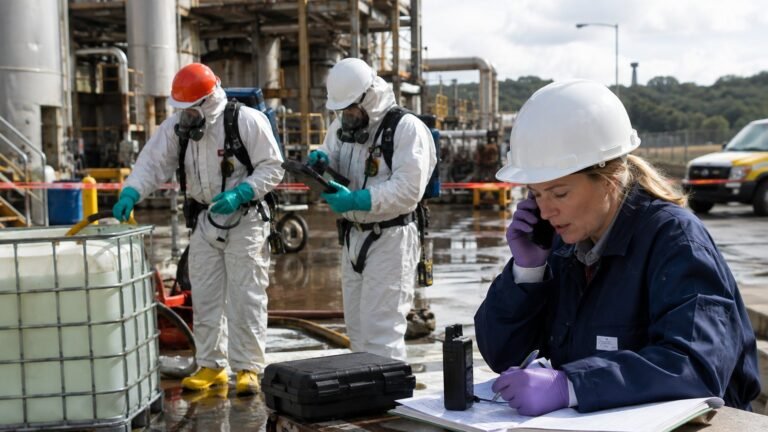
The receptionist follows the contact protocol, the environmental lead verifies credentials, and the escort accompanies the inspector. A records lead logs requests and copies provided. The team documents observations and begins prompt correction without obstructing the inspection.
Manage follow-up precisely
Preserve notes and documents, verify facts, correct conditions, assess extent, and respond by the stated deadline. Legal counsel may be appropriate for enforcement questions or disputed interpretations.
Put the requirement into daily work
Assign an accountable program owner and translate the hazardous waste inspection preparation decision into a written field standard. Identify who performs each step, who reviews exceptions, what tools and training they need, and where the resulting record is stored. Use clear acceptance criteria so operators, environmental staff, purchasing, shipping, and contractors reach the same conclusion.
Test the workflow with a real waste stream before broad rollout. Observe the work where it occurs, compare the record with field conditions, and correct gaps in equipment, layout, instructions, or responsibility. A technically correct procedure is not an effective control until people can follow it consistently.
Records and reevaluation triggers
Keep the source information, current regulatory basis, facility decision, approvals, and operating evidence together under a stable identifier. Records should allow a reviewer to reconstruct what was known, what decision was made, who made it, and how the facility confirmed ongoing performance.
Reevaluate the hazardous waste inspection preparation conclusion after changes in raw materials, process chemistry, equipment, waste composition, generation rate, storage, packaging, transporter, receiving facility, treatment method, permit conditions, or law. Also trigger review after a spill, rejected shipment, analytical anomaly, inspection finding, or recurring procedural failure.
Common mistakes
- Creating records after the inspector requests them.
- Letting untrained personnel speculate in interviews.
- Providing uncontrolled or unrelated document sets.
- Arguing in the field instead of recording facts.
- Delaying correction until a formal notice arrives.
Field checklist
- Maintain a current compliance index.
- Run routine field and record self-audits.
- Train reception, escorts, and subject experts.
- Prepare document and sampling protocols.
- Log every request and item provided.
- Debrief daily and preserve facts.
- Correct, investigate, and respond on time.
Frequently asked questions
Can a hazardous waste inspection be unannounced?
Should employees answer questions?
When should counsel be involved?
Check your state rules
Authorized states may be more stringent, add state-only wastes or requirements, or decline to adopt less stringent federal provisions. Verify current rules and agency interpretations in every applicable jurisdiction.
Primary sources
- EPA — RCRA Compliance Monitoring
- EPA — Hazardous Waste Generators
- 40 CFR Part 262 — Generator standards
Federal sources reviewed September 6, 2026. Verify the current text and the rules adopted in your jurisdiction before acting.
This article explains a general federal baseline. It is not a facility-specific determination or legal advice. Verify current federal, state, permit, and local requirements for your facts.