Environmental Release Reporting: CERCLA, EPCRA, RCRA, and Transportation Triggers
Environmental Release Reporting: CERCLA, EPCRA, RCRA, and Transportation Triggers
Build a rapid decision process for substance identity, reportable quantities, release pathways, agencies, and written follow-up.
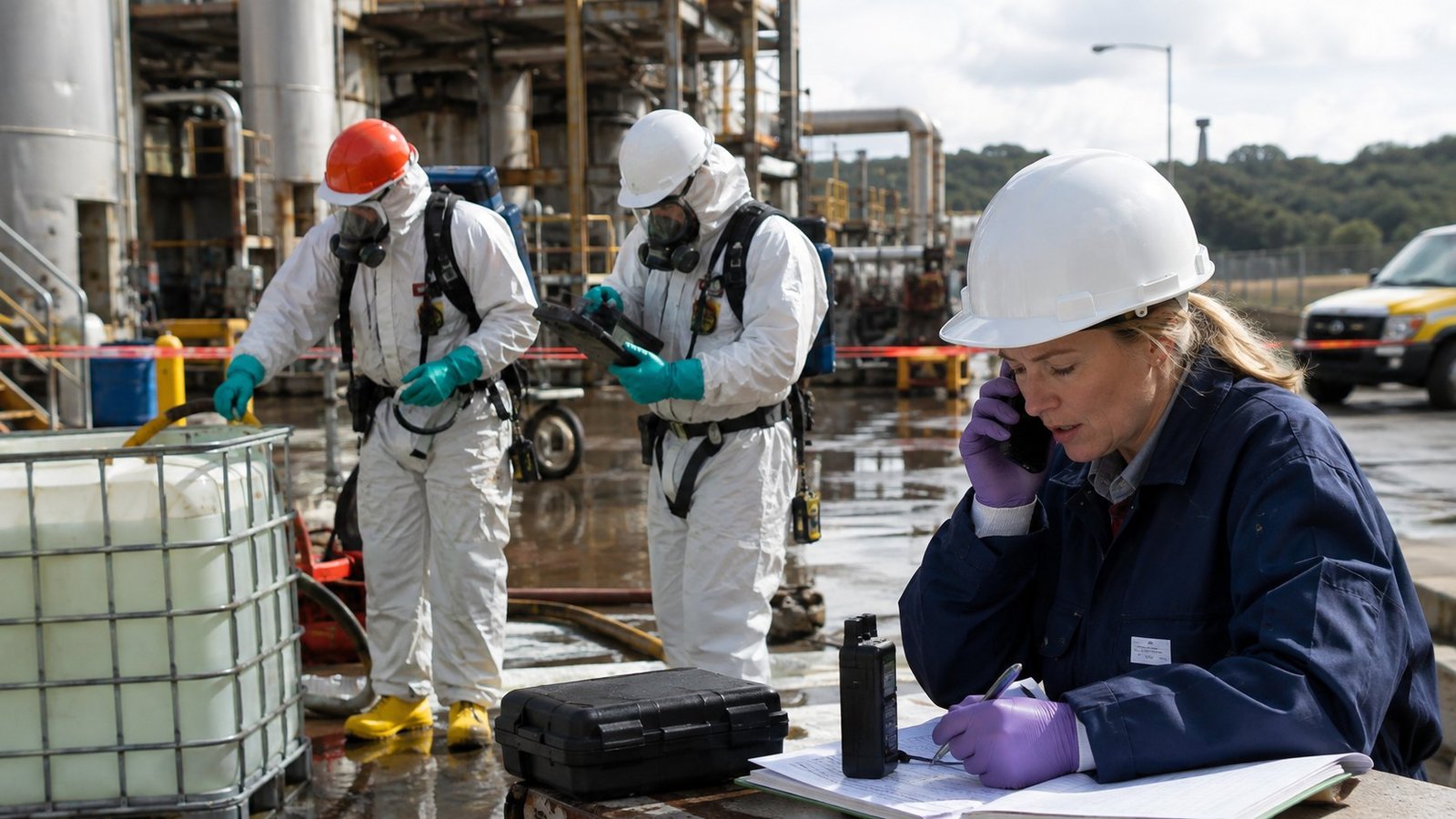
Release reporting is a multi-program decision. Identify the substance and mixture, estimate quantity and duration, determine whether a release to the environment occurred, compare applicable CERCLA and EPCRA reportable quantities over the correct period, evaluate RCRA, Clean Water Act, air, state, local, and transportation requirements, and notify the correct agencies immediately when triggered.
Prepare before an incident
Maintain chemical and waste inventories, reportable quantities, emergency contacts, calculation tools, tank and piping capacities, SDS and composition data, maps, and trained decision-makers. Do not rely on internet research during an uncontrolled event.
Separate reporting programs
CERCLA reporting to the National Response Center and EPCRA notice to SERC or TERC and LEPC or TEPC have overlapping but distinct triggers. State spill, water, air, permit, fire, and transportation reporting can be broader or faster.
Estimate and document quickly
Record time, source, substance, concentration, media, quantity released and recovered, duration, off-site potential, response actions, assumptions, and who made each notification. Update estimates as facts improve.
Worked example: mixture release
A hose releases a solvent mixture. The team controls the source, uses formulation and recovered volume to estimate constituent quantities, evaluates each reporting threshold and state rule, makes required calls, records confirmation details, and prepares written follow-up.
Close the reporting record
Retain calculations, call logs, agency instructions, written reports, photographs, response records, waste disposal, root cause, and corrective actions. Reconcile final quantities and explain changes from initial estimates.
Put the requirement into daily work
Assign an accountable owner and translate the environmental release reporting requirements decision into a field standard. Identify who performs each step, who reviews exceptions, what training and equipment are required, and where evidence is retained. Test the workflow with a real facility example before broad use.
Connect environmental, operations, maintenance, laboratory, purchasing, shipping, emergency-response, and contractor roles where their decisions affect the outcome. Use clear acceptance criteria so the same facts produce the same decision.
Records and reevaluation triggers
Keep the current regulatory basis, facility analysis, approvals, operating records, and exception history under a stable identifier. A reviewer should be able to reconstruct what was known, who decided, how the control was implemented, and how ongoing performance was verified.
Reevaluate after changes in material, process, equipment, quantity, storage, handling, vendor, destination, permit, law, incident, inspection finding, analytical result, or recurring failure. Document both the trigger and the resulting decision.
Common mistakes
- Waiting for perfect data before calling.
- Using the total mixture weight for every constituent without analysis.
- Calling only the National Response Center.
- Ignoring state and permit triggers below federal RQs.
- Failing to send EPCRA written follow-up.
Field checklist
- Control the release and protect people.
- Identify substances, media, time, and quantity.
- Evaluate each federal, state, local, and permit trigger.
- Make required immediate notifications.
- Document call details and updated estimates.
- Submit follow-up and complete corrective action.
Frequently asked questions
Who calls the National Response Center?
What if the amount is uncertain?
Does reporting admit liability?
Check your state rules
Authorized states may be more stringent, broader in scope, or use different adoption and reporting rules. Verify current requirements and agency interpretations in every applicable jurisdiction.
Primary sources
- EPA – EPCRA Emergency Release Notifications
- 40 CFR 302.6 – CERCLA notification
- 40 CFR 355.40 – EPCRA emergency release notification
Federal sources reviewed September 7, 2026. Verify the current text and the rules adopted in your jurisdiction before acting.
This article explains a general federal baseline. It is not a facility-specific determination or legal advice. Verify current federal, state, permit, and local requirements for your facts.