
Monthly Hazardous Waste Counting: What Counts and What Does Not
Quick answer: Under the federal rules, determine how much countable hazardous waste your site generates in each calendar month—not just how much it ships. Count acute and non-acute waste separately, apply the specific exclusions in 40 CFR 262.13, and compare the results with the generator-category thresholds. Track what remains on site separately: accumulation limits can affect management requirements even when the monthly category does not change.
This article explains the federal baseline. States may have different or more stringent requirements, including different generator categories and waste lists. Check the rules in the state where the waste is generated.
Start with the waste determination
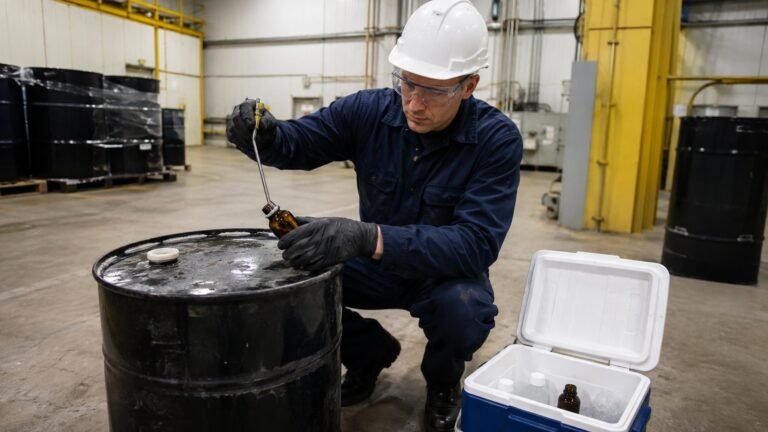
Before counting, identify each waste stream and determine whether it is hazardous under applicable rules. The federal determination is made at the point of generation, before dilution, mixing, or other alteration. Use knowledge of the waste and testing where appropriate under 40 CFR 262.11. Record the basis for the determination and revisit it when the process or materials change.
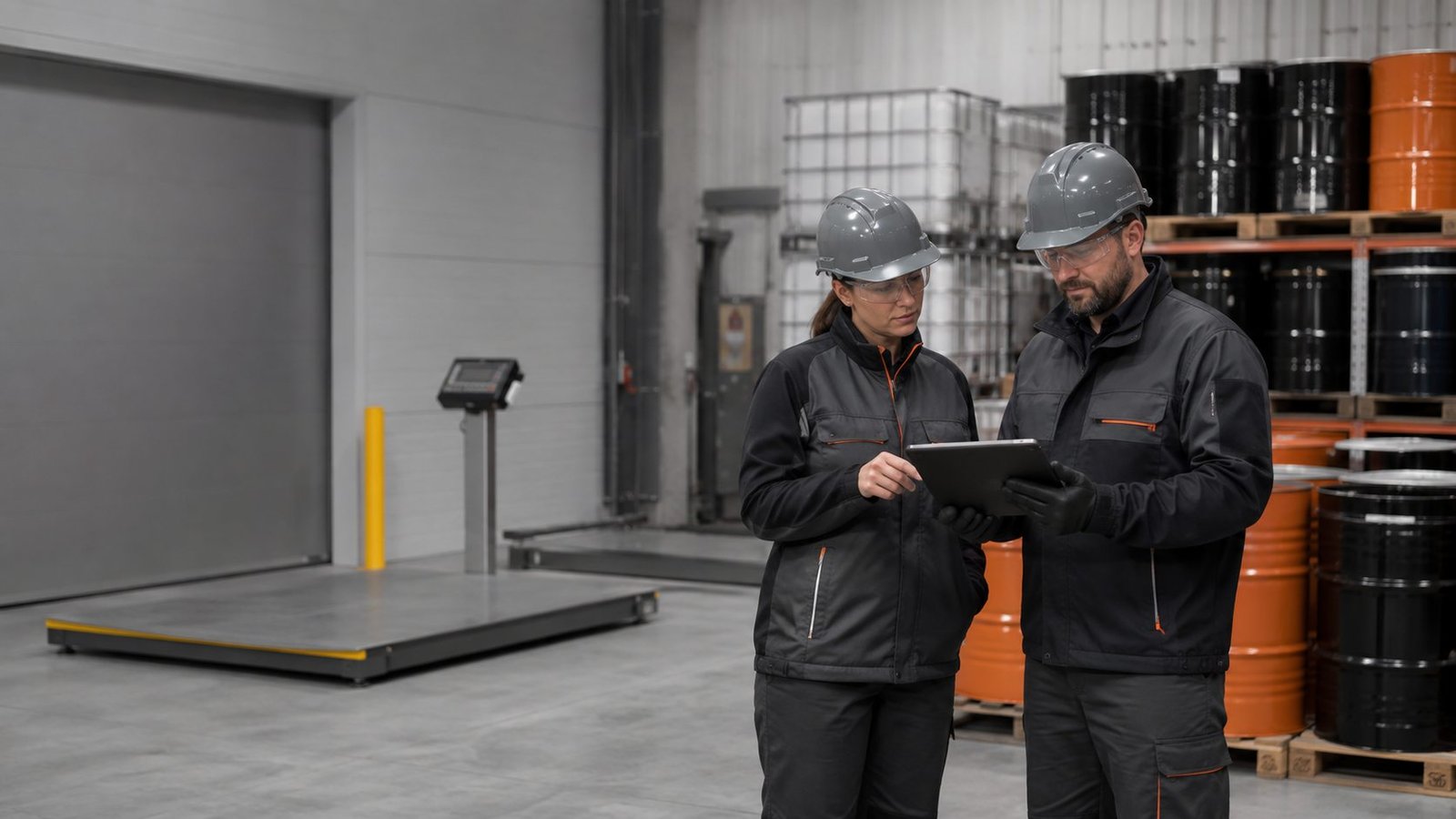
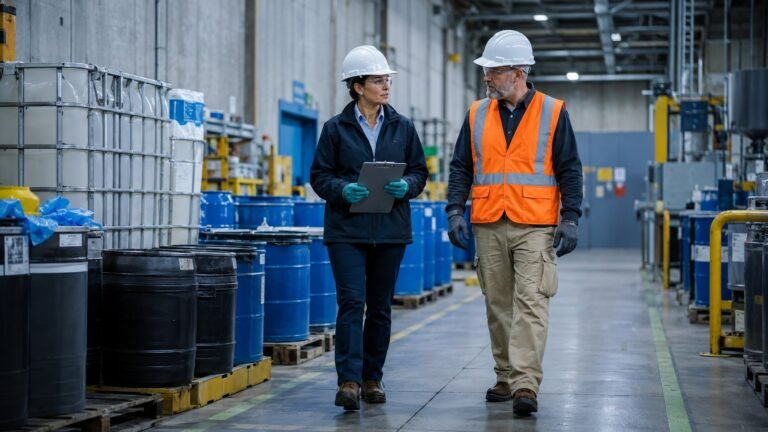
Map where waste arises: production, maintenance, laboratories, cleaning, and other activities. Small containers distributed across a facility can add up. EPA specifically says hazardous waste in satellite accumulation areas is included in monthly quantities. Waste accumulated before disposal or recycling and waste sent directly to an on-site treatment or disposal unit generally also counts unless a specific provision applies. See EPA’s generator questions.
Count generation, not shipments
Count the amount generated during the calendar month, even if it remains on site. Conversely, removing waste from on-site accumulation does not require counting it again if it was already counted once. Some on-site treatment and reclamation outputs also need not be counted again when the original waste was previously counted, subject to the conditions in 40 CFR 262.13(d).
Hypothetical example: A facility generates 75 kg of countable non-acute hazardous waste each month for 12 months and ships the accumulated 900 kg in December. Assuming no acute waste or other relevant waste and no accumulation limit is exceeded, the December shipment does not make December a 900 kg generation month. The facility generated 75 kg that month. Keep the monthly generation record and the on-site inventory as separate figures.
Which wastes can be excluded from the count?
The exceptions are specific, not a blanket rule that recycled or specially managed waste never counts. Section 262.13(c) includes, for example:
- Universal waste managed under the applicable federal universal-waste rules, and used oil managed under the specified used-oil rules.
- Certain waste managed immediately upon generation only in qualifying on-site elementary neutralization, wastewater treatment, or totally enclosed treatment units.
- Waste recycled without prior storage or accumulation only in an on-site process subject to the specified recycling provision.
- Qualifying episodic-event waste managed in compliance with subpart L, and certain hazardous waste pharmaceuticals subject to or managed under subpart P or conditionally exempt under its controlled-substance provision.
Other exclusions and exact conditions appear in § 262.13(c) and (d). An exclusion from the monthly count does not mean a material has no management requirements. For example, universal waste has its own rules. Confirm that the relevant conditions actually apply before excluding a stream, and document why.
Compare the three monthly quantities
Federal Table 1 in § 262.13 separates acute waste, non-acute waste, and residues from cleanup of acute hazardous waste. A generator is an LQG for the month if it generates more than 1 kg of acute hazardous waste, 1,000 kg or more of non-acute hazardous waste, or more than 100 kg of acute-waste cleanup residues. With acute waste at or below 1 kg and cleanup residues at or below 100 kg, more than 100 kg but less than 1,000 kg of non-acute waste is SQG; 100 kg or less is VSQG. When both acute and non-acute wastes are generated, compare their resulting categories and apply the more stringent category to both for that month.
These thresholds are in kilograms. Use a defensible weight or documented estimate, avoid counting a container’s empty weight as waste, and retain the basis for conversions. Do not round a value across a threshold merely for convenience.
Accumulation is a separate check
Monthly generation and waste on hand answer different questions. Waste generated in prior months can remain on site without being counted again, but the amount accumulated can trigger additional requirements. For example, federal § 262.14(a)(3) specifies additional requirements for a VSQG that accumulates more than 1 kg of acute hazardous waste or more than 100 kg of qualifying acute spill cleanup material. Review the actual provision and any state rules; do not assume an accumulation trigger automatically changes the monthly generation category.
Common misconceptions
- “We only count what leaves the site.” The monthly measure is generation, not shipment.
- “Anything recycled is excluded.” The exclusion depends on the regulatory pathway and its conditions.
- “Small satellite containers do not count until moved.” They are included in the monthly determination unless a specific exclusion applies.
- “Our category is fixed for the year.” Federal category can change month to month.
A practical monthly record
List each stream, generation date or month, waste determination, weight and measurement method, and whether a documented exclusion applies. Total acute and non-acute waste separately, track acute cleanup residues, compare the thresholds, and maintain a separate current accumulation inventory. Review unusual cleanouts, spills, process changes, and any applicable state-specific waste rules before closing the month.
Sources
- 40 CFR 262.13, Generator category determination
- 40 CFR 262.11, Hazardous waste determination and recordkeeping
- 40 CFR 262.14, VSQG conditions for exemption
- EPA, Frequent questions about hazardous waste generation
HazWastePros provides independent education and general reference information, not legal advice or a determination for a particular facility, waste, or shipment. Verify current federal, state, and other applicable requirements.
Primary sources reviewed October 26, 2026.

One Comment
Comments are closed.