Central Accumulation Areas: Time Limits, Inspections, and Records
Central Accumulation Areas: Time Limits, Inspections, and Records
How SQGs and LQGs can control accumulation time, container condition, aisle space, inspections, emergency equipment, and corrective actions.
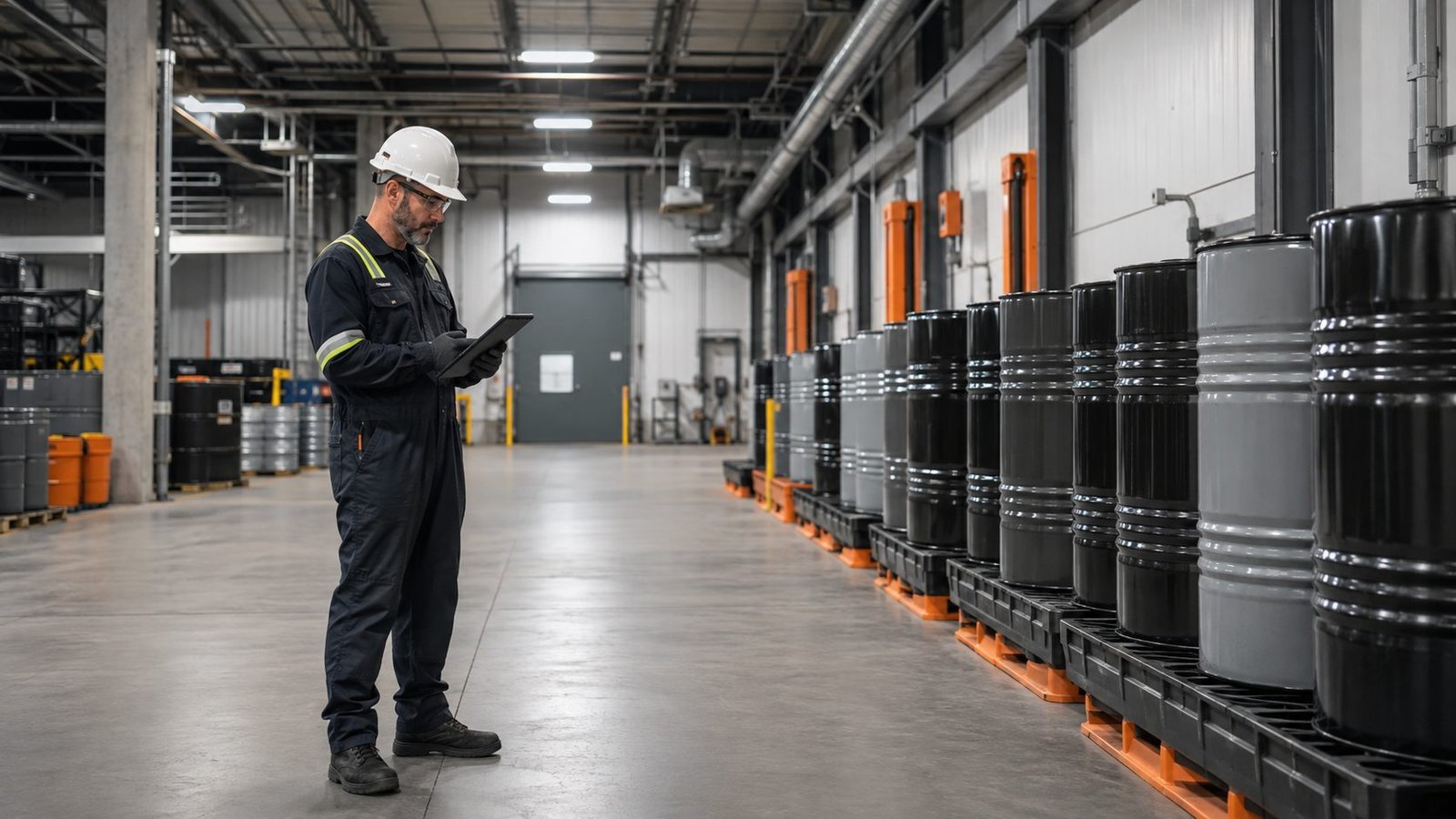
SQGs generally may accumulate hazardous waste for 180 days, or 270 days when waste must travel 200 miles or more, and may not exceed 6,000 kilograms onsite under the federal conditional exemption. LQGs generally use a 90-day period with no federal accumulation quantity limit. Both must satisfy the applicable unit, labeling, preparedness, and documentation conditions.
Identify the framework before inspecting the area
“Central accumulation area” is an operating term for an area where a generator accumulates hazardous waste under 40 CFR 262.16 or 262.17 without a storage permit, provided all conditions are met. The applicable duties depend on generator category and unit type.
SQGs generally follow a 180-day framework, extended to 270 days when waste must be transported 200 miles or more for treatment, storage, or disposal, and must remain within the 6,000-kilogram onsite limit. LQGs generally use 90 days and do not have a federal quantity ceiling under that generator accumulation provision. Extensions require regulator action for qualifying unforeseen, temporary, and uncontrollable circumstances.
Control every container and its clock
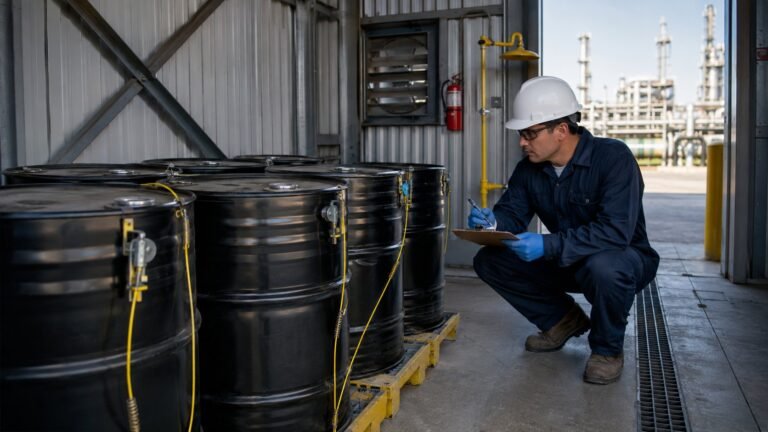
Mark containers with “Hazardous Waste,” an indication of hazards, and the date accumulation began. Keep them in good condition, compatible, and closed except when adding or removing waste. Separate incompatible materials and apply the special controls for ignitable and reactive wastes.
Use an inventory that connects each physical container to its start date, waste stream, quantity, location, and planned shipment. Alerts should occur well before the time limit. The label remains the floor-level evidence; a spreadsheet cannot cure a missing or unreadable date.
Make weekly inspections meaningful
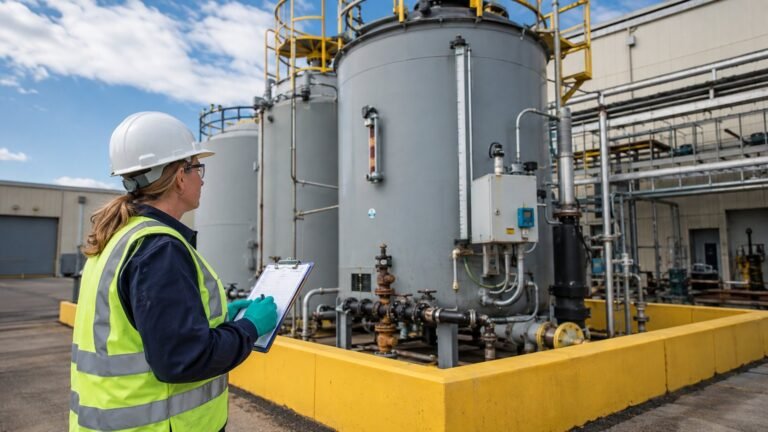
Container accumulation areas subject to the incorporated Part 265 container provisions must be inspected at least weekly for leaks and deterioration caused by corrosion or other factors. A useful inspection also checks closures, labels, dates, segregation, containment, aisle space, housekeeping, emergency equipment access, and unusual heat, pressure, or odor.
Record the area, date, inspector, finding, immediate response, assigned owner, due date, and closure evidence. Correct active leaks or unsafe conditions immediately. Trend recurring problems so the program fixes causes such as incompatible packaging, forklift traffic, overfilling, or delayed pickups.
Preserve access and preparedness
Maintain aisle space needed for unobstructed movement of personnel, fire protection equipment, spill-control equipment, and decontamination equipment unless the fire or emergency authority requires otherwise. Do not allow pallets, empty drums, or staging shipments to block exits or response access.
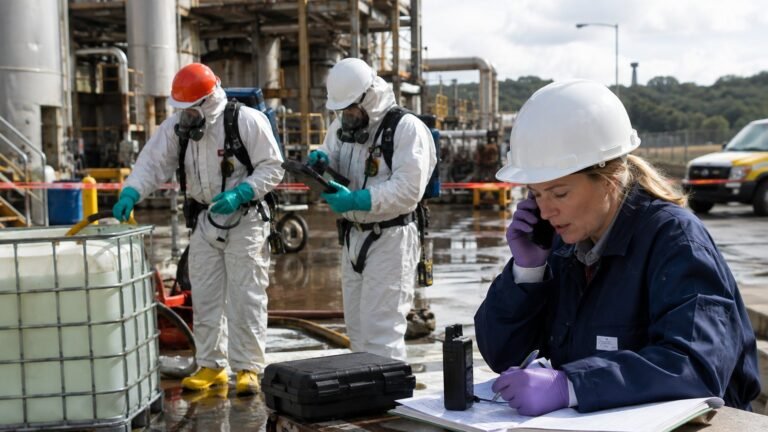
Required emergency communications, fire control, spill control, decontamination equipment, testing and maintenance, arrangements with local authorities, and employee access depend on the generator category and facility hazards. Tie the CAA inspection to the site’s broader preparedness program.
Worked example: a Friday aging alert
Simplified example. An SQG inventory alert shows a drum approaching the facility’s internal shipping deadline. The inspector verifies the original accumulation date and finds that the planned pickup was moved to the following week.
The environmental coordinator recalculates remaining time, confirms transporter and receiving-facility availability, and escalates the shipment. The team does not alter the drum date or wait for the regulatory deadline. It also reviews why the first pickup failed and adds a backup vendor and earlier scheduling trigger.
If unforeseen circumstances may require an extension, the generator contacts the authorized regulator before relying on one. A vendor delay does not automatically create extra time.
Common CAA mistakes
- Managing an SQG or LQG area under the wrong category.
- Missing or reset accumulation dates.
- Inspection forms with no corrective-action closure.
- Blocked aisles or emergency equipment.
- Open funnels and damaged closures.
- Incompatible wastes stored together.
- Scheduling shipments too close to the deadline.
- Assuming a transporter cancellation automatically extends the accumulation period.
Field checklist
- Confirm the month’s generator category and the accumulation unit.
- Verify every container’s start date, words, and hazard indication.
- Check condition, compatibility, closure, and fill level.
- Inspect container areas at least weekly where required.
- Record and close every corrective action.
- Maintain required aisle space and emergency access.
- Track SQG onsite quantity and the applicable time limit.
- Track LQG 90-day dates with internal advance alerts.
- Schedule backup shipment capacity.
- Retain inspection, inventory, shipment, and extension records.
Frequently asked questions
How often must a hazardous waste container CAA be inspected?
Can an SQG keep hazardous waste for 270 days?
Can a generator change the start date when consolidating containers?
Check your state rules
State rules may shorten time limits, change quantity units, require secondary containment or inspection documentation, and add siting or fire-code provisions. Confirm the authorized program and permits.
Primary sources
- 40 CFR 262.16 — SQG accumulation conditions
- 40 CFR 262.17 — LQG accumulation conditions
- 40 CFR Part 265, Subpart I — Container standards
- 40 CFR Part 262, Subpart M — Preparedness, prevention, and emergency procedures
Federal sources reviewed September 6, 2026. Verify the current text and the rules adopted in your jurisdiction before acting.
This article explains a general federal baseline. It is not a facility-specific determination or legal advice. Verify current federal, state, permit, and local requirements for your facts.