Hazardous Waste Inspections: A Facility Self-Audit Checklist
Hazardous Waste Inspections: A Facility Self-Audit Checklist
A risk-based review of waste determinations, generator category, accumulation areas, training, emergency readiness, shipments, and corrective-action evidence.

A strong hazardous waste self-audit traces several real waste streams from the process to final records. Confirm the determination, monthly count, accumulation conditions, employee knowledge, shipment papers, return-copy tracking, LDR documentation, and corrective actions. Field observations and records must support the same story.
Inspect the system, not just the storage area
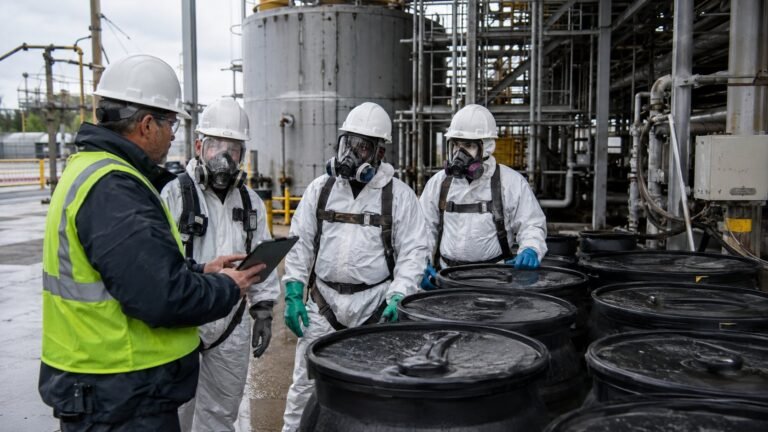
Agency inspections often begin with records and continue to the floor, or begin on the floor and work backward. A self-audit should do both. Select representative waste streams, including a high-volume stream, an acute or unusual stream if present, a recently changed process, and a special stream such as universal waste or used oil.
For each one, ask what generated it, how the determination was made, when it counts, where it is accumulated, who handles it, how it is shipped, which records close the loop, and what changes trigger review.
Review the records before walking the floor
Start with the waste-stream register and determination files. Sample monthly generator-category calculations, EPA identification information, notifications, biennial reports where applicable, training records, contingency-plan or emergency information, inspection logs, manifests, e-Manifest records, land disposal restriction notices, exception reports, and vendor qualification files.
Test dates and cross-references. A manifest should connect to a container and waste profile; the profile should connect to a determination; the determination should connect to the current process. Look for copied conclusions, expired supporting data, missing return copies, and records that cannot be tied to a responsible owner.
Walk from process to accumulation area
Begin at the point of generation. Ask the operator to explain what enters the container, which label is used, how incompatibles are controlled, what “closed” means for that device, and who is called when the container nears its limit.
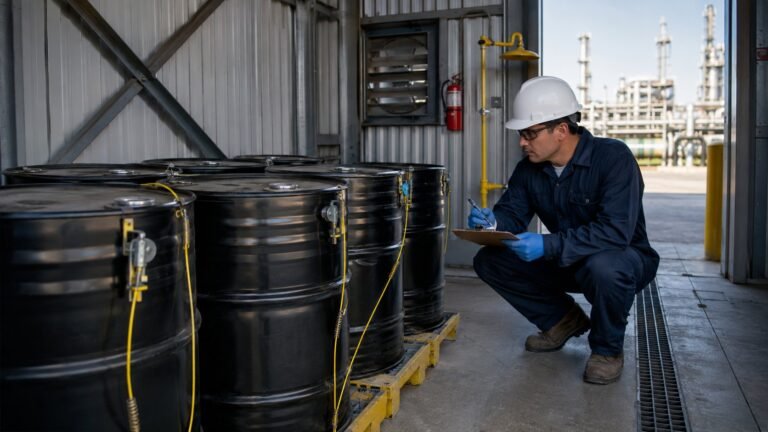
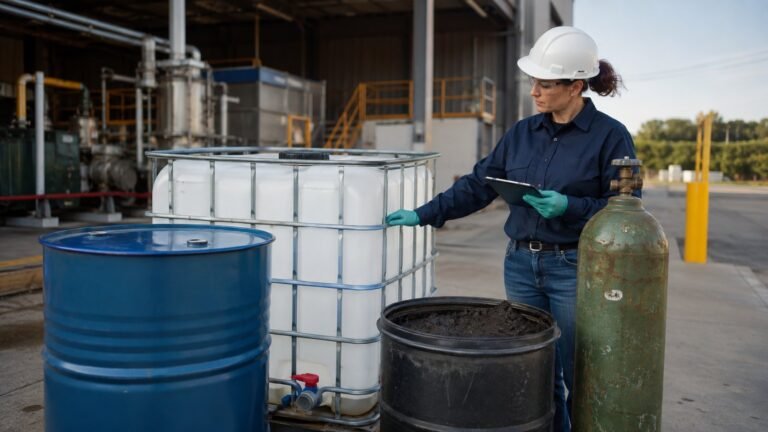
At SAAs, verify location, operator control, quantity, container condition, closure, and markings. At CAAs, verify dates, aging, weekly inspections, aisle space, segregation, preparedness equipment, housekeeping, and corrective actions. Also check used-oil tanks, universal-waste areas, empty-container staging, unknowns, and places where wastes can hide during shutdowns or maintenance.
Use interviews to test whether the program works
Ask short questions tied to the employee’s duties: “What goes in this container?” “What do you do if it leaks?” “When do you call environmental?” “Where is the emergency information?” “What changed in this process recently?”
The objective is not to trap employees. Their answers show whether written procedures reached the people making daily decisions. A signed training roster is useful, but demonstrated understanding is stronger evidence of implementation.
Worked example: the record-floor mismatch
Simplified example. A determination says a parts-cleaning waste contains one approved solvent. During the floor walk, the auditor learns that a second cleaner was introduced two months earlier and both now enter the same drum. The manifest still uses the original profile.
The facility stops relying on the old conclusion, controls the affected waste, identifies shipments and onsite containers, reevaluates the determination and transportation information, contacts appropriate specialists and vendors, and documents corrective actions. It also adds purchasing and process-change triggers so environmental review occurs before substitutions reach the floor.
Turn findings into controlled corrective action
Classify findings by risk and time sensitivity. Assign an owner and due date, record interim protection, preserve evidence of completion, verify effectiveness, and look for extent of condition. A leaking drum can require immediate response; a weak revision-control system may require a longer project but still needs interim controls.
Do not close a finding because a form was updated. Confirm that the change works in the area, on all shifts, and for similar operations.
Field checklist
- Trace selected waste streams from process to final record.
- Verify current waste determinations and review triggers.
- Recalculate sampled generator-category months.
- Inspect SAAs for location, control, quantity, closure, and labels.
- Inspect CAAs for dates, condition, compatibility, aisle space, and weekly records.
- Test emergency equipment access and employee knowledge.
- Verify training content, timing, competency, and records.
- Reconcile manifests, e-Manifest status, LDR notices, and exceptions.
- Inspect universal waste and used oil under their own standards.
- Assign, document, and independently verify corrective actions.
Frequently asked questions
How often should a facility perform a full self-audit?
Should auditors inspect every waste stream?
What is the best evidence that a finding is closed?
Check your state rules
Authorized-state agencies may use different forms, terminology, inspection frequencies, reporting systems, or retention periods. Include state rules, permits, orders, and local requirements in the audit criteria.
Primary sources
- EPA — Hazardous waste generator regulatory summary
- 40 CFR Part 262 — Standards applicable to generators
- EPA — Hazardous Waste Information Platform and e-Manifest resources
Federal sources reviewed September 6, 2026. Verify the current text and the rules adopted in your jurisdiction before acting.
This article explains a general federal baseline. It is not a facility-specific determination or legal advice. Verify current federal, state, permit, and local requirements for your facts.