Satellite Accumulation Areas: Rules, Limits, and Common Mistakes
Satellite Accumulation Areas: Rules, Limits, and Common Mistakes
A floor-level guide to where an SAA may be located, who controls it, how containers must be managed, and what happens when a limit is reached.
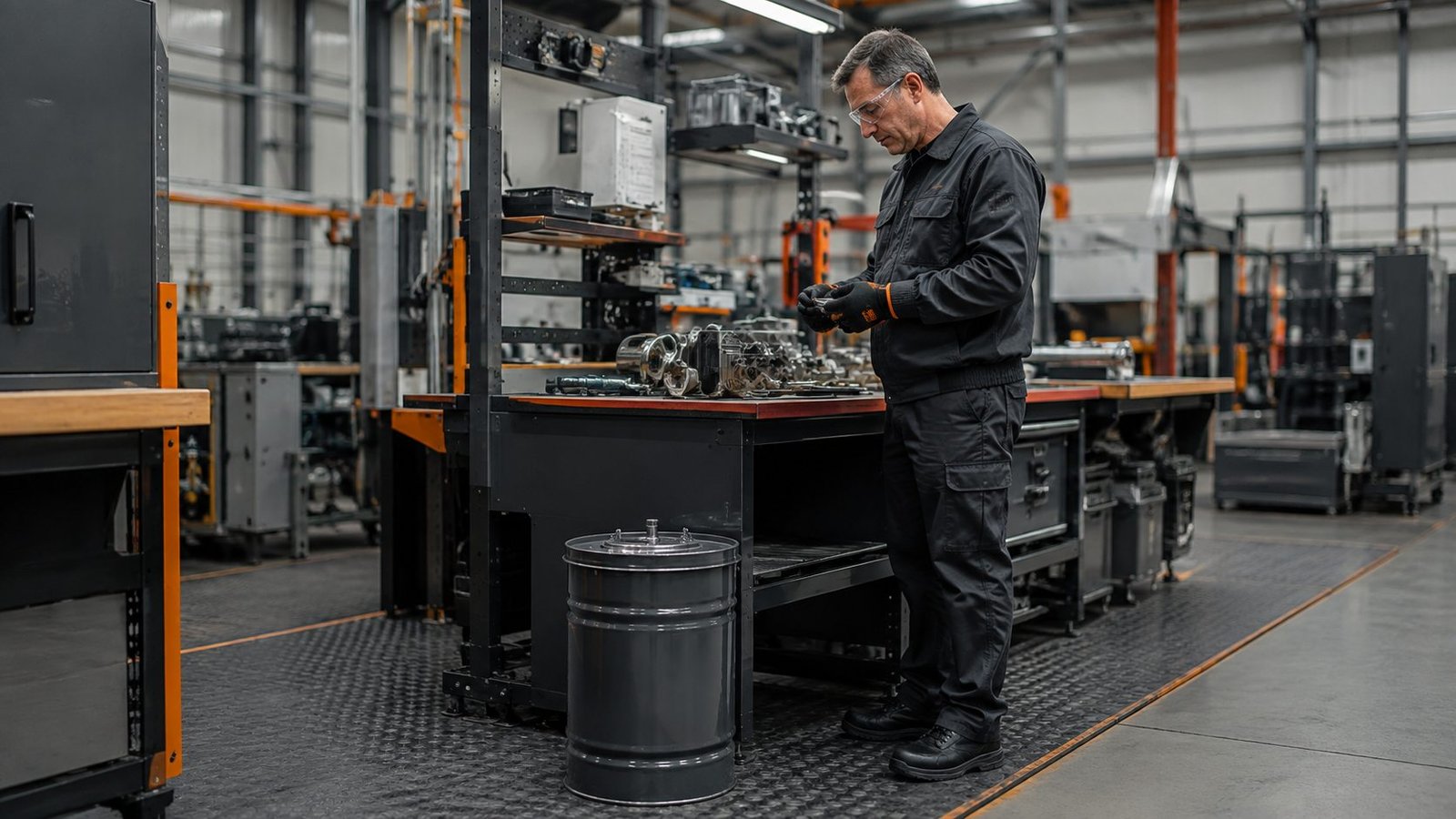
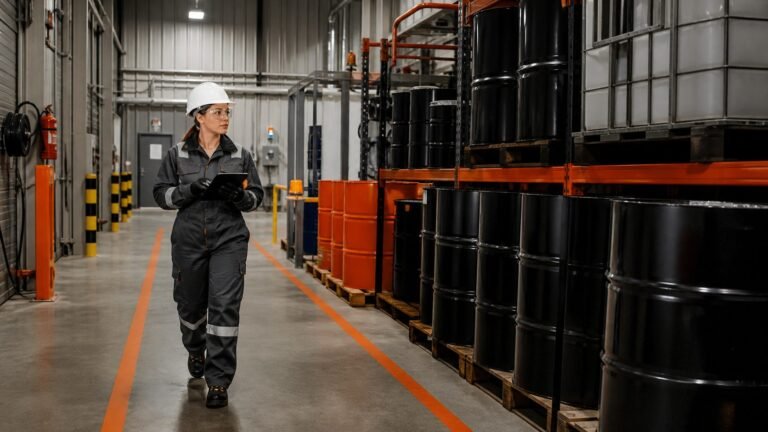
A federal satellite accumulation area may hold hazardous waste at or near the point where it is generated and under the control of the operator of the process. Follow the container or unit standards, mark containers “Hazardous Waste” with a hazard indication, stay within the applicable quantity limits, and date and move excess within three consecutive calendar days.
What makes an area an SAA?
An SAA is an optional generator accumulation pathway under 40 CFR 262.15. It lets waste be collected near the process before transfer to a central accumulation area or an allowed destination. Its value comes with location and control conditions.
The waste must be accumulated at or near the point of generation and under the control of the operator of the process generating it. The regulation does not provide a fixed number of feet. Evaluate the physical relationship, the operator’s ability to see or control access, the movement route, and the reason the container is located there.
A remote convenience storage room may be a central accumulation area even when employees call it a satellite. Name the area only after its facts fit the rule.
Know the federal quantity limits
A generator may accumulate up to 55 gallons of non-acute hazardous waste in an SAA. For acute hazardous waste, the federal limits are one quart of liquid acute hazardous waste or one kilogram of solid acute hazardous waste.
Track the total within the SAA, not just each individual container. When an applicable limit is exceeded, mark the excess container with the date the excess began and move the excess within three consecutive calendar days to a central accumulation area, a permitted or interim-status facility, or another allowed destination identified in the rule.
Do not confuse “three consecutive calendar days” with three business days. Weekends and holidays remain calendar days.
Manage containers from the first addition
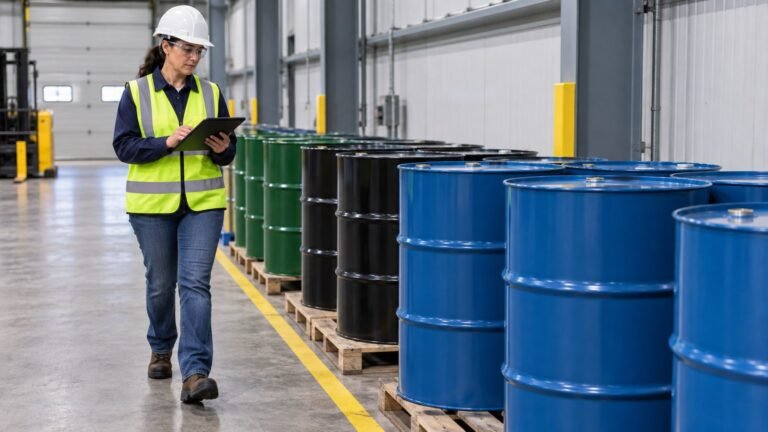
Use a container in good condition and compatible with its contents. Keep it closed except when adding, removing, or consolidating waste, or during limited temporary venting allowed when necessary for equipment operation or to prevent a dangerous situation. Prevent incompatible wastes from being mixed or placed in contact.
Mark or label every SAA container with the words “Hazardous Waste” and an indication of the hazards of the contents. A shop nickname, product label, or waste profile number alone does not meet those federal elements.
If eligible unwanted material in a laboratory is managed under the academic laboratories rule, or if the waste is managed in a tank, containment building, or drip pad, other provisions may apply. Identify the actual unit and pathway.
Worked example: paint-line cleanup waste
Simplified example. A paint-line operator adds ignitable cleanup solvent to a closed, compatible drum beside the cleaning station. The drum is labeled “Hazardous Waste” and carries a flammability indication. The operator controls access and records the fill level during routine area checks.
When the total reaches the applicable SAA limit, the team stops ordinary accumulation in that container, marks the date, closes and inspects it, and follows the site’s transfer procedure. The waste reaches the CAA within three consecutive calendar days and enters the central-area aging and inspection system.
If a second compatible drum is started merely to avoid moving the first one, the arrangement can defeat the quantity limit. The program should define how operators notify the environmental owner before capacity is reached.
Build a floor-level control system
- Map every SAA to its generating process and responsible operator.
- List the authorized waste streams and containers.
- Post clear fill and escalation instructions.
- Provide correct labels before the first addition.
- Keep compatible closures and funnels available.
- Define how quantities are measured and totaled.
- Trigger transfer before the limit becomes an emergency.
- Train backup operators and supervisors.
- Audit the area after process or staffing changes.
Common SAA mistakes
- Locating the container for convenience rather than at or near generation.
- Leaving it outside the operator’s control.
- Keeping funnels or lids open between additions.
- Omitting “Hazardous Waste” or the hazard indication.
- Counting each drum separately instead of the SAA total.
- Using three business days for an excess transfer.
- Starting another container to avoid the quantity limit.
- Treating an informal weekly glance as a substitute for daily operator ownership.
Field checklist
- Confirm the area is at or near the point of generation.
- Identify the operator who controls the generating process.
- Approve compatible containers and closure devices.
- Apply “Hazardous Waste” and an accurate hazard indication.
- Keep containers closed except during allowed operations.
- Segregate incompatible wastes.
- Track total non-acute and acute quantities in the SAA.
- Date excess immediately and transfer it within three consecutive calendar days.
- Train the primary and backup operators.
- Reevaluate after process, layout, or staffing changes.
Frequently asked questions
How close must an SAA be to the process?
Can an SAA have more than one container?
Does the three-day transfer period exclude weekends?
Check your state rules
A state may define “at or near,” require inspections or dates from the first addition, use different acute-waste terminology, or impose fire-code and secondary-containment controls beyond the federal baseline.
Primary sources
- 40 CFR 262.15 — Satellite accumulation area regulations
- EPA — Frequent questions on the Generator Improvements Rule
Federal sources reviewed September 6, 2026. Verify the current text and the rules adopted in your jurisdiction before acting.
This article explains a general federal baseline. It is not a facility-specific determination or legal advice. Verify current federal, state, permit, and local requirements for your facts.