RCRA Exclusions: How to Build a Defensible Applicability File
RCRA Exclusions: How to Build a Defensible Applicability File
Translate an exclusion citation into operating conditions, evidence, owners, and change controls that survive an inspection.
An exclusion is a conditional conclusion supported by facts. Identify whether it excludes a material from solid waste or hazardous waste, verify every condition, confirm state adoption, assign operating controls, and retain evidence showing that the conditions continue to be met.
Identify the exact legal pathway
Distinguish exclusions from the definition of solid waste, exclusions from hazardous waste, conditional exemptions, and alternative management standards. They produce different duties. Record the current citation and the precise material and activity it covers.
Convert conditions into controls
List each condition in plain language and assign an owner, record, frequency, and exception response. Conditions may address source, use, containment, labeling, accumulation time, destination, reclamation, notifications, or documentation.
Verify state implementation
Authorized states may be more stringent and may decline to adopt less stringent federal provisions. Check the rules in the state where the material is generated and any relevant destination requirements.
Worked example: claimed closed-loop recycling
A facility maps the material from production through storage and return to the process. It documents transfer points, losses, storage controls, useful contribution, product value, and state status. The review exposes an off-site step that falls outside the claimed pathway, so the team revises management before relying on the exclusion.
Maintain an applicability packet
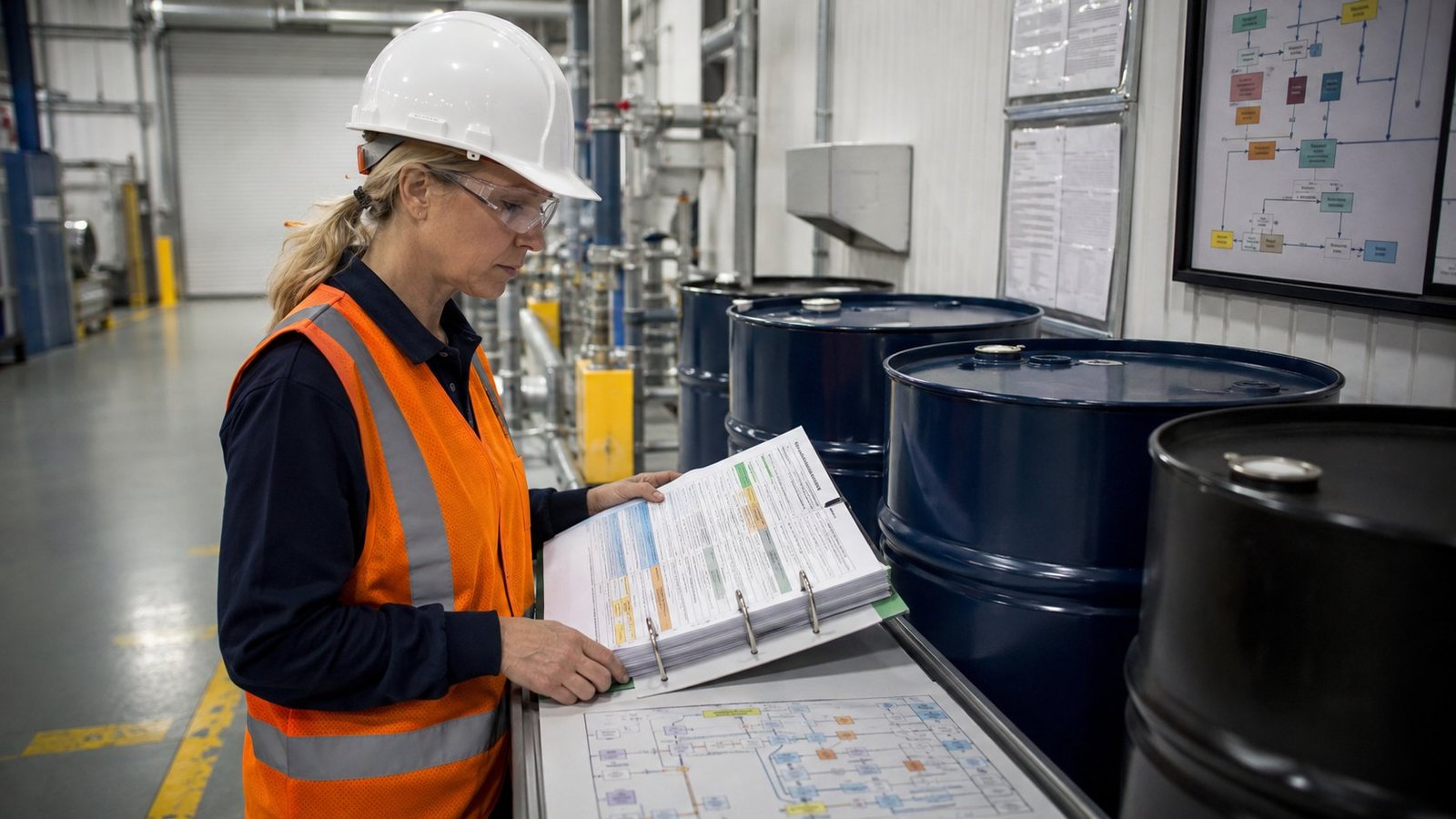
Include the legal text, a dated analysis, process flow, material description, photographs, contracts, notifications, calculations, shipment or use records, training, and approval. Use a controlled review date and event-based triggers.
Put the requirement into daily work
Assign an accountable program owner and translate the RCRA hazardous waste exclusions decision into a written field standard. Identify who performs each step, who reviews exceptions, what tools and training they need, and where the resulting record is stored. Use clear acceptance criteria so operators, environmental staff, purchasing, shipping, and contractors reach the same conclusion.
Test the workflow with a real waste stream before broad rollout. Observe the work where it occurs, compare the record with field conditions, and correct gaps in equipment, layout, instructions, or responsibility. A technically correct procedure is not an effective control until people can follow it consistently.
Records and reevaluation triggers
Keep the source information, current regulatory basis, facility decision, approvals, and operating evidence together under a stable identifier. Records should allow a reviewer to reconstruct what was known, what decision was made, who made it, and how the facility confirmed ongoing performance.
Reevaluate the RCRA hazardous waste exclusions conclusion after changes in raw materials, process chemistry, equipment, waste composition, generation rate, storage, packaging, transporter, receiving facility, treatment method, permit conditions, or law. Also trigger review after a spill, rejected shipment, analytical anomaly, inspection finding, or recurring procedural failure.
Common mistakes
- Using the word exempt without naming the provision.
- Relying on an old federal summary instead of current state rules.
- Ignoring one condition because the overall activity seems low risk.
- Keeping the legal memo apart from operating records.
- Continuing an exclusion after the process or destination changes.
Field checklist
- Classify the type of exclusion or alternative standard.
- Capture the current federal and state text.
- List every eligibility condition.
- Map each condition to a control and record.
- Verify notifications and destination restrictions.
- Approve the analysis with accountable owners.
- Recheck after any relevant change.
Frequently asked questions
Are all federal exclusions effective in every state?
Is a vendor statement enough?
What invalidates an exclusion?
Check your state rules
Authorized states may be more stringent, add state-only wastes or requirements, or decline to adopt less stringent federal provisions. Verify current rules and agency interpretations in every applicable jurisdiction.
Primary sources
- 40 CFR 261.4 — Exclusions
- EPA — Regulatory Exclusions and Alternative Standards
- EPA — State Authorization
Federal sources reviewed September 6, 2026. Verify the current text and the rules adopted in your jurisdiction before acting.
This article explains a general federal baseline. It is not a facility-specific determination or legal advice. Verify current federal, state, permit, and local requirements for your facts.