EPA Hazardous Waste S Codes: How to Prepare for the End of H141
EPA Hazardous Waste S Codes: How to Prepare for the End of H141
Understand the 24 storage-and-transfer management method codes, who enters them, and what generators should update before January 1, 2027.

EPA is replacing the broad H141 storage-and-transfer management method code with 24 S-series codes that identify the waste’s intended final management method after an intermediate facility stores, bulks, or transfers it. The S codes are already available. EPA’s 2025 Biennial Report instructions say H141 will be deprecated after the 2025 cycle, and the planned operational removal date is January 1, 2027. Generators should obtain the correct S code from the receiving facility, reconcile it to returned manifests and vendor records, and update reporting workflows before the cutoff.
What is changing on January 1, 2027?
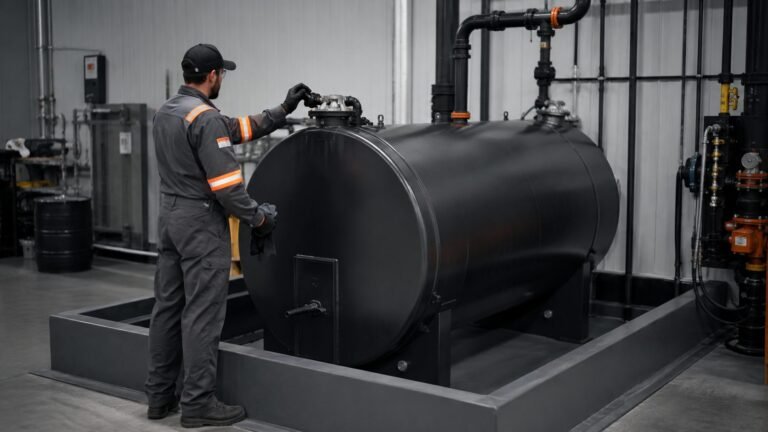
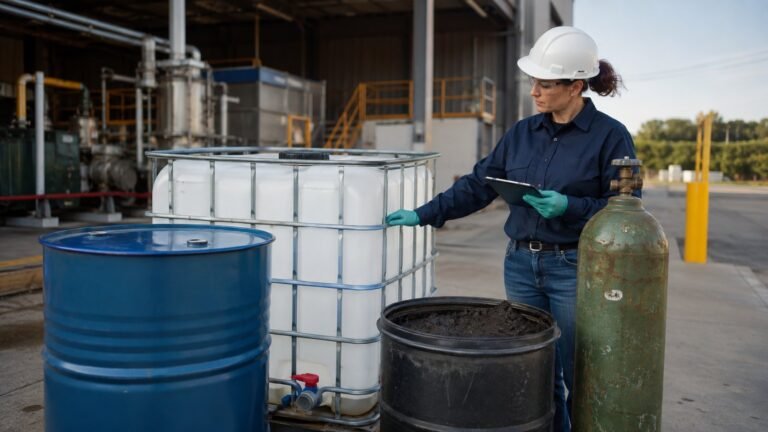
Management Method Code H141 has long indicated that a receiving site stored, bulked, or transferred hazardous waste without reclaiming, treating, or disposing of it at that site. That broad code identifies the activity at the first receiving facility but does not explain what happens after the waste leaves that facility.
EPA added 24 codes beginning with S to close that information gap. Each code means the first receiving facility stored or bulked the waste and transferred it to another site for a stated final management method. The S codes have been available in RCRAInfo, e-Manifest, and the 2025 Biennial Report cycle. EPA’s current instructions allow H141 for the 2025 cycle but say it will be deprecated afterward. Implementation guidance identifies January 1, 2027 as the planned date H141 will be removed from e-Manifest and Biennial Reporting.
This is a reporting-code transition. It does not by itself change a waste determination, generator category, accumulation time limit, land-disposal-restriction obligation, transporter requirement, or facility permit condition.
An S code is a management method code, not a waste code
Do not confuse an S-series management method code with an EPA hazardous waste code such as D001, F003, K-listed codes, or a state waste code. Waste codes identify why a waste is regulated. Management method codes describe how a receiving facility manages the waste.
The S prefix does not mean “storage unit” in the permitting sense and does not create authority to store hazardous waste. It communicates that the designated receiving facility stores, bulks, or transfers the shipment before another facility performs the identified recovery, treatment, or disposal method.
Who selects and enters the S code?
The designated receiving facility is responsible for completing the management method field on the manifest after receiving the shipment. On a Uniform Hazardous Waste Manifest, the code appears in Item 19; on a continuation sheet, it appears in Item 36. A generator may see a proposed code on a profile, quote, or draft manifest, but the receiving facility confirms the code based on how it manages the waste and where it sends the waste next.
Generators still have an important control role. They should obtain the receiving facility’s intended code, compare it with the approved waste profile and service description, review the code on the returned manifest, and use the returned-manifest or facility documentation required by the applicable Biennial or state annual-report instructions.
The 24 S-series storage-and-transfer codes
The code suffix generally mirrors the final management method. For example, S020 means storage and transfer before solvent recovery, while the facility that actually performs solvent recovery reports the applicable onsite recovery method.
Transfer for reclamation or recovery
| Code | Final management after storage or transfer |
|---|---|
| S010 | Metals recovery |
| S011 | Mercury recovery |
| S015 | Airbag deployment or deactivation followed by metals recovery |
| S020 | Solvent recovery |
| S039 | Other recovery or reclamation for reuse |
| S050 | Energy recovery |
| S061 | Fuel blending before energy recovery at another site |
Transfer for destruction or treatment before disposal
| Code | Final management after storage or transfer |
|---|---|
| S040 | Incineration or other thermal destruction that is not use as fuel |
| S041 | Open burning or open detonation under the applicable Subpart X authority |
| S042 | Thermal desorption |
| S070 | Chemical treatment |
| S081 | Biological treatment |
| S090 | Polymerization |
| S100 | Physical treatment only |
| S110 | Stabilization before land disposal at another site |
| S113 | Stabilization to remove a hazardous characteristic or achieve delisting levels |
| S120 | Combined chemical, biological, or physical treatment |
| S121 | Neutralization only |
| S122 | Evaporation |
| S129 | Other treatment without onsite disposal |
Transfer for disposal
| Code | Final management after storage or transfer |
|---|---|
| S130 | Surface impoundment that will be closed as a landfill |
| S131 | Land treatment or land application |
| S132 | Landfill with applicable prior treatment or stabilization |
| S134 | Deep-well or underground injection |
Do not add S151 to this replacement list. EPA separately defines S151 as temporary storage of a rejected shipment. It is manifest-only and cannot be reported on a Biennial or Annual Report.
A generator transition workflow
- Find every H141 occurrence. Search returned manifests, e-Manifest exports, annual and biennial reports, waste profiles, vendor reports, invoices, internal databases, and spreadsheet mappings.
- Separate direct management from transfer. Confirm whether the designated facility actually performs the recovery, treatment, or disposal method or transfers the waste to another site.
- Request the S code in writing. Ask each receiving facility or broker to identify the code it expects to place in Item 19 for every affected waste profile.
- Record the final destination and method. Retain enough support to explain why the selected S code is consistent with the downstream management path.
- Update controlled systems. Revise code tables, validation rules, profile templates, reporting workbooks, data imports, exception reports, and written procedures.
- Review returned manifests. Compare Item 19 or Item 36 with the approved profile and investigate differences before annual or biennial reporting.
- Reconcile reports by reporting year. Preserve the code that appears in the applicable source record; do not automatically overwrite historical H141 records with a new S code.
- Test before the cutoff. Run at least one mock annual or Biennial Report extract and confirm that S codes pass portal and internal validation.
Worked examples
Example 1: solvent recovery through a transfer facility
A generator ships spent solvent to a permitted facility that consolidates loads and transfers the waste to another facility for solvent recovery. The first facility’s management method is S020. The downstream facility performing recovery uses the applicable recovery code for its actual onsite management.
Example 2: stabilization followed by landfill
A transfer facility stores and consolidates the waste before sending it to a separate facility for stabilization prior to land disposal. The facts may support S110. Do not select S132 merely because landfill is the final disposal destination if the code definition and reporting instructions call for the next stated management method. Confirm the path with the receiving facility.
Example 3: direct incineration
If the designated receiving facility itself incinerates the waste, an S code is not appropriate merely because the waste was stored briefly before entering the unit. The facility should use the management method that describes the actual onsite incineration. S040 applies when the receiving site stores or bulks the waste and transfers it to another site for incineration.
Update profiles, contracts, and data controls
Do not treat the transition as a one-field software update. Waste profiles should identify whether the named receiving facility is an intermediate or final management site. Service agreements and vendor data should make the downstream method traceable. Reporting workbooks should distinguish the manifest management method from internal disposal descriptions and accounting categories.
Build an exception report for any record that still contains H141 after the transition date, contains an S code that conflicts with the documented downstream method, or contains no management method on the returned manifest. Preserve the original record, the correction request, the facility response, and the final reporting decision.
What Texas facilities should check
Texas uses EPA’s Uniform Hazardous Waste Manifest for hazardous and Class 1 waste and also requires Texas waste codes where applicable. TCEQ’s Annual Waste Summary instructions direct facilities to use the management method code from Item 19 for offsite shipments and to ensure onsite management codes agree with the Notice of Registration.
Texas facilities should confirm how TCEQ’s reporting systems will accept the new S codes for the applicable reporting year, verify that vendor exports preserve the eight-character Texas waste code separately from the management method code, and reconcile any change with the site’s Notice of Registration when onsite waste-management units are involved. The S-code transition does not replace Texas waste codes.
Common mistakes to prevent
- Calling an S code a new hazardous waste code.
- Assuming the generator chooses Item 19 without receiving-facility confirmation.
- Using an S code when the designated facility performs the actual management onsite.
- Mapping every H141 record to a single S code without reviewing downstream management.
- Confusing S110 stabilization with S113 treatment that removes a characteristic or achieves delisting levels.
- Using S151 in an annual or Biennial Report.
- Overwriting historical H141 data instead of preserving the reporting-period record.
- Ignoring state annual-report systems, state waste codes, or state-specific implementation dates.
Field checklist
- Inventory every active waste profile and returned manifest that uses H141.
- Ask each receiving facility for the expected S code and downstream management path.
- Separate management method codes from EPA and state waste codes.
- Update profile forms, code tables, imports, validations, and reporting workbooks.
- Review Item 19 and Item 36 on returned manifests and resolve inconsistencies.
- Test Annual or Biennial Report exports before January 1, 2027.
- Keep S151 out of Annual and Biennial Report data.
- Verify state implementation requirements and portal behavior.
Frequently asked questions
Are the new S codes already available?
Does the generator enter the S code on the manifest?
Does S020 replace H020?
Should historical H141 records be converted?
Do the S codes change a generator’s RCRA category?
Check your state rules
The S codes are nationally defined RCRAInfo values, but authorized states may operate annual-report programs, use additional waste codes, or implement portal changes on different schedules. Confirm the current form instructions and electronic-system behavior with every applicable state. Texas facilities should separately preserve the Texas waste code and verify Annual Waste Summary and Notice of Registration requirements.
Primary sources
- EPA — 2025 Hazardous Waste Report Instructions excerpt
- EPA RCRAInfo — Nationally Defined Management Method Codes
- EPA — Hazardous Waste Manifest System
- 40 CFR 262.41 — Biennial Report
- TCEQ — Uniform Hazardous Waste Manifest
- TCEQ — Annual Waste Summary Instructions
Sources reviewed September 16, 2026. Verify the current text and the rules adopted in your jurisdiction before acting.
This article explains a general federal baseline. It is not a facility-specific determination or legal advice. Verify current federal, state, permit, and local requirements for your facts.