Emergency Preparedness and Contingency Planning for Hazardous Waste Generators
Emergency Preparedness and Contingency Planning for Hazardous Waste Generators
How SQG and LQG responsibilities differ—and how to turn required equipment, arrangements, postings, plans, and drills into a usable response system.

SQGs and LQGs must maintain applicable preparedness and prevention controls. SQGs need required equipment, arrangements, an emergency coordinator, and posted information, among other conditions. LQGs also need a written contingency plan, emergency procedures, copies to designated responders, and quick reference guide information. The plan must match actual wastes, layout, equipment, people, and coordination arrangements.
SQG and LQG frameworks are different
Federal emergency requirements depend on generator category. Both SQGs and LQGs must maintain and operate the facility to minimize the possibility of fire, explosion, or an unplanned release that could threaten health or the environment. They must provide communications or alarm systems, fire and spill-control equipment, water or equivalent capability as applicable, testing and maintenance, access to communications, aisle space, and required arrangements with local authorities.
SQGs follow the emergency procedures in 40 CFR 262.16, including an emergency coordinator who is onsite or on call and required information posted next to telephones or in areas directly involved in hazardous waste generation and accumulation. LQGs follow Subpart M and maintain a written contingency plan and quick reference guide.
Make local arrangements specific and documented
Attempt arrangements with police, fire departments, emergency response teams, emergency contractors, equipment suppliers, and local hospitals as appropriate. Provide information about the types and hazards of waste, places where personnel normally work, entrances and evacuation routes, possible injuries, and the emergency services requested.
Document requests, meetings, facility tours, emails, responses, and refusals. A generic annual letter without site information may not produce useful coordination. When multiple organizations could respond, designate primary authority and explain the arrangement.
Build an LQG plan responders can use
The contingency plan describes actions facility personnel must take in response to fires, explosions, or releases. It addresses arrangements with local responders, emergency coordinators, emergency equipment, evacuation plans where evacuation could be necessary, and other required elements. Keep it at the facility and submit copies to designated local emergency responders.
The quick reference guide summarizes the waste types and hazards, estimated maximum quantities, special treatment needs, site map, water-supply locations, notification systems, and emergency-coordinator contact information required by the rule. It should help a responder understand the site before reading the full plan.
Connect the plan to real response decisions
Define how employees recognize an emergency, raise the alarm, stop work, isolate energy, evacuate or shelter, contact the coordinator, identify the waste, protect drains, request outside assistance, and preserve incident records. Coordinate RCRA actions with OSHA, fire-code, spill-prevention, EPCRA, CERCLA, wastewater, and state reporting procedures without assuming one plan answers every program.
Train to role. Operators need immediate actions and boundaries. Coordinators need authority, access to information, notification tools, and alternates. Reception, security, and night shift personnel need to know how responders enter and whom to contact.
Worked example: leaking reactive waste after hours
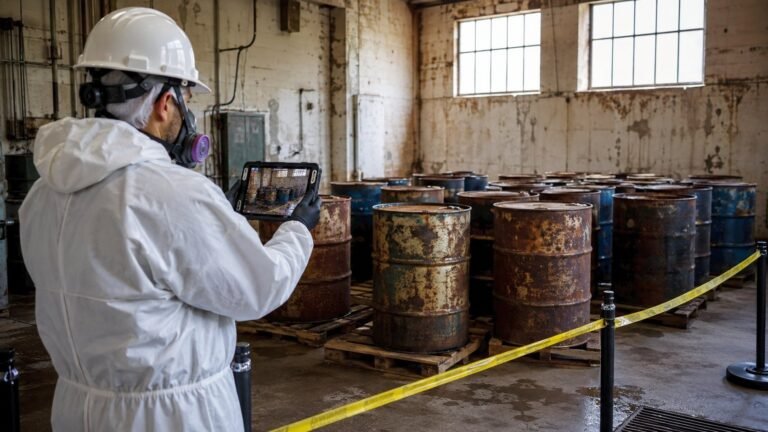
Simplified example. A night-shift employee sees a bulging container and hears venting. The employee does not approach or move it. The alarm and escalation procedure activates the emergency coordinator, who evaluates the hazard, protects personnel, contacts responders, and provides the waste and site information.
After stabilization, the facility evaluates notification and reporting duties, manages residues and debris through proper determinations, documents the incident, and investigates the initiating cause. It reviews whether the container, inspection system, process-change controls, and emergency information were adequate.
Review and amend the system when facts change
An LQG contingency plan must be reviewed and immediately amended when applicable regulations change, the plan fails in an emergency, the facility changes in a way that materially increases emergency potential or changes response, emergency coordinators change, or emergency equipment changes. Operational review should also follow drills, near misses, contractor changes, new waste streams, layout changes, and communication failures.
Use drills to test contacts, access, maps, alarms, equipment, accountability, and decision authority. Record lessons and close corrective actions.
Field checklist
- Confirm the current generator category.
- Inventory alarms, communications, fire, spill, and decontamination equipment.
- Test and maintain equipment on a documented schedule.
- Preserve aisle space and access to communications.
- Attempt and document arrangements with applicable local authorities.
- Post SQG emergency information in required locations.
- Maintain LQG contingency plan and quick reference guide where applicable.
- Name qualified primary and alternate emergency coordinators.
- Provide current documents to designated responders.
- Run drills and update plans, maps, contacts, and equipment records after changes.
Frequently asked questions
Does every hazardous waste generator need a written contingency plan?
What if a fire department does not respond to an arrangement request?
When must an LQG contingency plan be amended?
Check your state rules
States, local emergency planning bodies, fire codes, permits, and other federal programs may require additional plans, notifications, equipment, reporting thresholds, or coordination. Integrate them without confusing their legal sources.
Primary sources
- 40 CFR 262.16 — SQG preparedness and emergency procedures
- 40 CFR Part 262, Subpart M — LQG preparedness and contingency planning
- 40 CFR 262.261 — Contingency plan purpose and implementation
- 40 CFR 262.262 — Contingency plan content
- 40 CFR 262.263 — Copies and quick reference guide
Federal sources reviewed September 6, 2026. Verify the current text and the rules adopted in your jurisdiction before acting.
This article explains a general federal baseline. It is not a facility-specific determination or legal advice. Verify current federal, state, permit, and local requirements for your facts.