Hazardous Waste Tanks for Generators: Design, Inspections, and Records
Hazardous Waste Tanks for Generators: Design, Inspections, and Records
Manage generator accumulation tanks using the correct category, integrity, secondary-containment, operating, inspection, and closure standards.
Hazardous waste tank requirements depend on generator category, accumulation conditions, tank design, age, location, and state rules. Document tank-system integrity, prevent overfill and incompatible reactions, inspect required components at the correct frequency, respond to releases, and retain engineering and operating records.
Define the regulated tank system
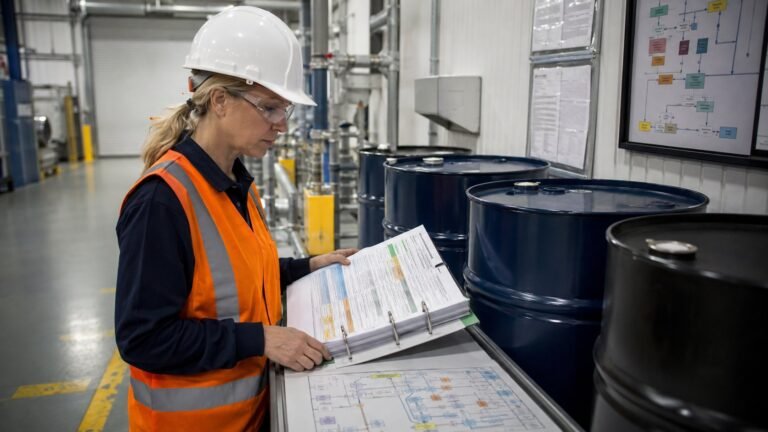
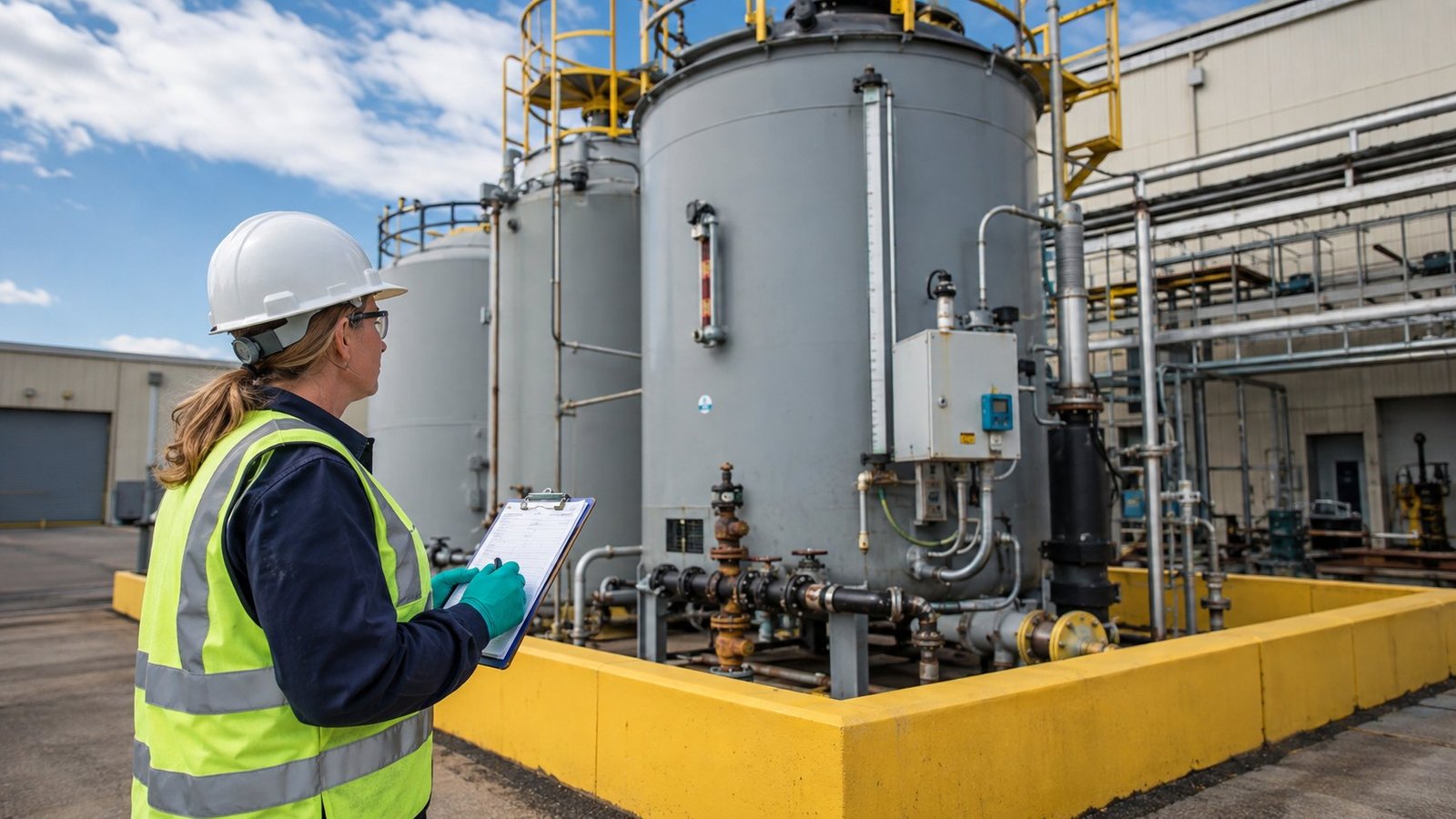
Map the tank, ancillary equipment, transfer piping, valves, containment, controls, and connected units. Confirm which equipment is part of the hazardous waste accumulation system and which exemption or generator provision is claimed.
Verify integrity and containment
Review design assessments, installation records, corrosion protection, leak detection, secondary containment, and compatibility. Requirements differ for existing and new systems and may be broader under state rules.
Operate within controlled limits
Define allowable wastes, maximum level, freeboard or overfill controls, feed and withdrawal steps, incompatible-material restrictions, and shutdown response. Link operating limits to the waste determination and process controls.
Worked example: batch accumulation tank
An SQG uses a tank for acidic hazardous wastewater before shipment. The review connects the tank and piping, verifies compatibility and inspection points, documents daily operating observations, and corrects a blind section of ancillary piping that was missing from the checklist.
Inspect and respond
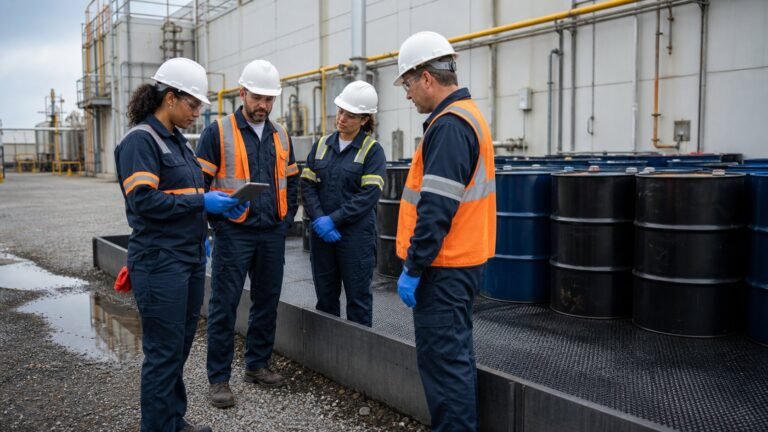
Inspect discharge controls, monitoring data, construction materials, containment, and accessible portions at applicable frequencies. Treat alarms, unexplained level loss, stains, or containment liquid as conditions requiring prompt investigation.
Put the requirement into daily work
Assign an accountable owner and translate the hazardous waste tank requirements decision into a field standard. Identify who performs each step, who reviews exceptions, what training and equipment are required, and where evidence is retained. Test the workflow with a real facility example before broad use.
Connect environmental, operations, maintenance, laboratory, purchasing, shipping, emergency-response, and contractor roles where their decisions affect the outcome. Use clear acceptance criteria so the same facts produce the same decision.
Records and reevaluation triggers
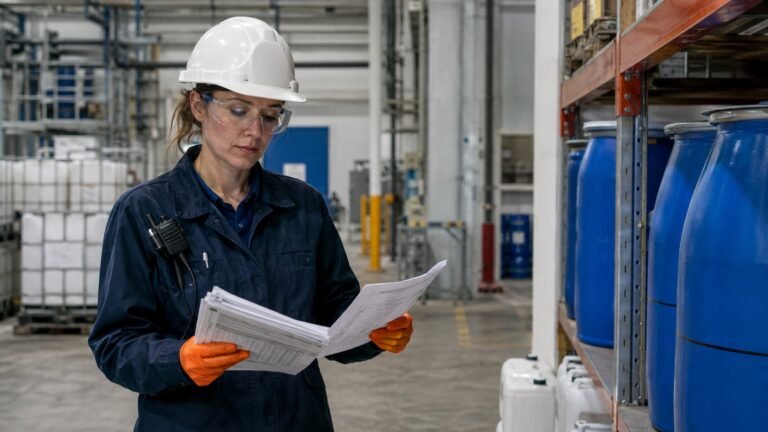
Keep the current regulatory basis, facility analysis, approvals, operating records, and exception history under a stable identifier. A reviewer should be able to reconstruct what was known, who decided, how the control was implemented, and how ongoing performance was verified.
Reevaluate after changes in material, process, equipment, quantity, storage, handling, vendor, destination, permit, law, incident, inspection finding, analytical result, or recurring failure. Document both the trigger and the resulting decision.
Common mistakes
- Inspecting only the tank shell.
- Assuming process-tank controls satisfy RCRA.
- Omitting ancillary equipment.
- Using container inspection frequencies for tanks.
- Keeping integrity records separate from the unit file.
Field checklist
- Map the complete tank system.
- Confirm generator category and unit basis.
- Verify integrity and secondary containment.
- Define compatible wastes and operating limits.
- Inspect required components at correct frequencies.
- Document alarms, releases, repairs, and closure.
Frequently asked questions
Are all hazardous waste tanks subject to identical standards?
Do tanks require daily inspections?
Can a generator treat waste in an accumulation tank?
Check your state rules
Authorized states may be more stringent, broader in scope, or use different adoption and reporting rules. Verify current requirements and agency interpretations in every applicable jurisdiction.
Primary sources
- 40 CFR 262.16(b)(3) – SQG tanks
- 40 CFR 262.17(a)(2) – LQG tanks
- 40 CFR Part 265 Subpart J – Tank systems
Federal sources reviewed September 7, 2026. Verify the current text and the rules adopted in your jurisdiction before acting.
This article explains a general federal baseline. It is not a facility-specific determination or legal advice. Verify current federal, state, permit, and local requirements for your facts.