Used Oil Management for Facilities: Storage, Marking, and Shipments
Used Oil Management for Facilities: Storage, Marking, and Shipments
How to identify used oil, control contributors, prevent hazardous-waste mixing, manage tanks and containers, address releases, and verify the downstream path.
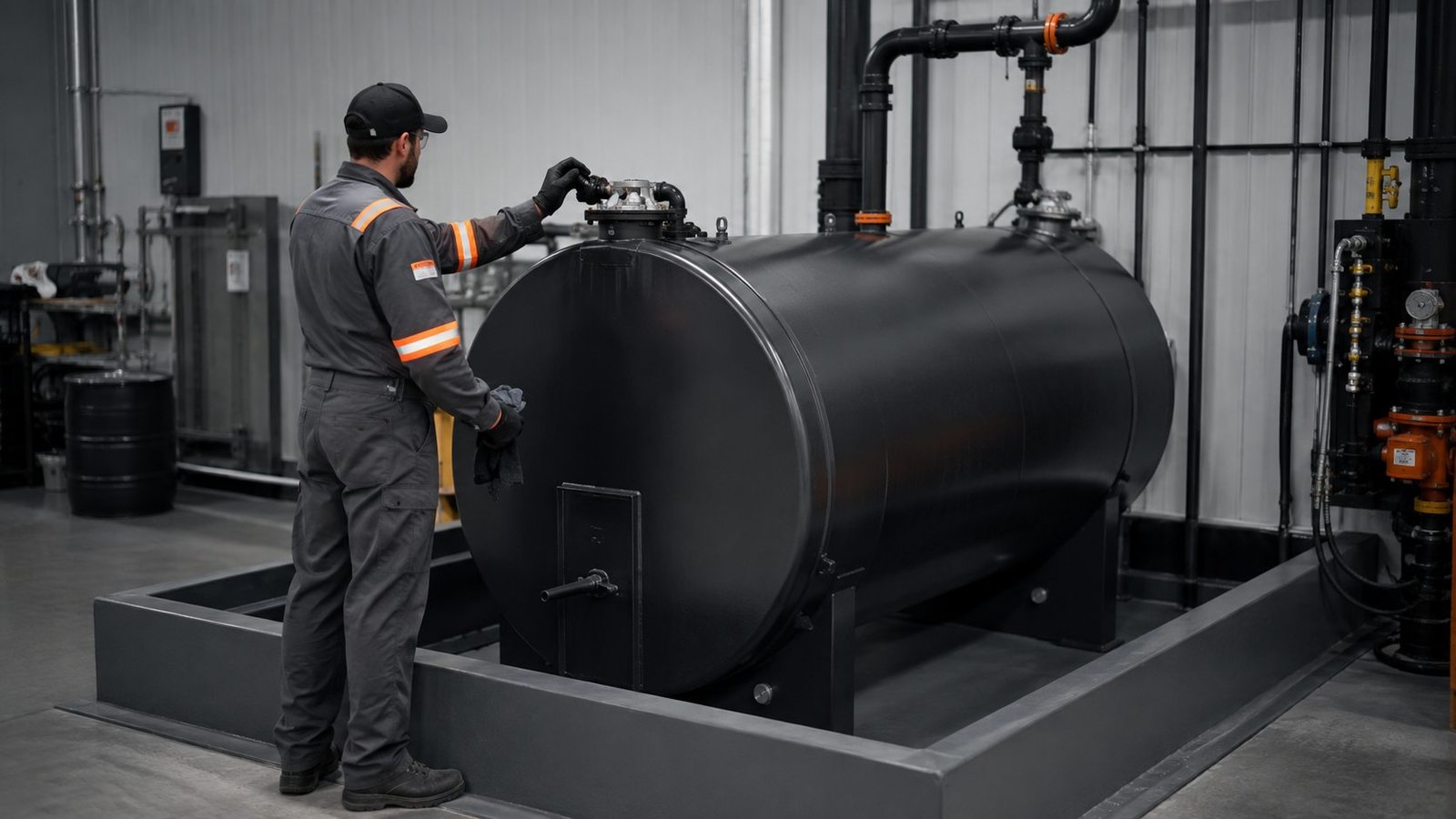
Used oil is oil refined from crude or synthetic oil that has been used and contaminated by that use. Generators must store it in qualifying tanks or containers in good condition, mark those units “Used Oil,” respond to releases, and use allowed transport and management pathways. Control every contributor because mixing hazardous waste or unknown shop liquids into used oil can change the regulatory status and cost.
First confirm that the material is used oil
Common examples include used lubricating, hydraulic, gear, compressor, and heat-transfer oils. Products that were never used, antifreeze, fuels, vegetable oils, and many oily wastewaters are not automatically used oil. Apply the definition in 40 CFR 279.1 to the specific material.
Part 279 regulates generators, collection centers, aggregation points, transporters, processors and re-refiners, burners, and marketers differently. A facility can perform more than one role, so identify every activity rather than assuming “generator” answers the full question.
Control tanks, containers, and releases
Generator used-oil tanks and containers must be in good condition and not leaking. Mark them clearly with the words “Used Oil.” “Waste Oil,” “Dirty Oil,” or a product name is not the required federal marking.
When a release occurs, stop it, contain the released oil, clean and properly manage the affected material, and repair or replace the leaking unit before returning it to service. Evaluate whether other federal, state, spill-plan, wastewater, or reporting requirements apply.
Prevent mixing and investigate total halogens
Mixing hazardous waste with used oil can cause the mixture to be regulated as hazardous waste under 40 CFR 279.10. Control all fill points, authorized contributors, shop containers, and contractor practices.
Used oil containing more than 1,000 parts per million total halogens is presumed to have been mixed with listed halogenated hazardous waste unless the presumption is rebutted. This is a rebuttable presumption, not an automatic final classification and not the same as the used-oil fuel specification.
A defensible rebuttal identifies sources, process facts, chlorinated products, tank history, sampling design, methods, and the evidence showing that listed hazardous waste did not cause the halogens.
Use the correct downstream pathway
Generators generally must use a transporter with an EPA identification number unless a specific self-transport provision applies. Confirm the transporter, collection center, aggregation point, processor, re-refiner, burner, or marketer role and its conditions.
Do not assume a sale, recycling claim, fuel value, or certificate establishes used-oil specification status. Track quantities and destinations, retain analyses and rebuttal records, and investigate rejected loads or unusual results.
Worked example: solvent in the used-oil tank
Simplified example. A mechanic reports that a small container of spent chlorinated cleaner may have been poured into the used-oil tank. The facility quarantines the tank, stops shipment, identifies the product and amount, interviews contributors, reviews tank history, and evaluates hazardous-waste mixing and the total-halogen presumption.
The facility does not ship under its routine used-oil profile until the issue is resolved. Corrective action includes dedicated collection containers, controlled tank access, contractor orientation, and a rapid reporting rule for questionable additions.
Treat filters and related materials as separate decisions
The federal exclusion for certain used-oil filters depends on filter construction and proper hot draining by an allowed method. Terne-plated filters are treated differently. Document the draining process and state adoption. Free liquids removed from filters remain part of the used-oil analysis.
Absorbents, sorbent pads, water bottoms, antifreeze mixtures, and tank cleanout residues require their own determinations. Proximity to used oil does not automatically place them in Part 279.
Common used-oil mistakes
- Marking tanks “Waste Oil” instead of “Used Oil.”
- Allowing unknown shop liquids into the tank.
- Ignoring leaks because containment caught the oil.
- Treating 1,000 ppm total halogens as an automatic pass/fail classification.
- Confusing the rebuttable presumption with fuel specification limits.
- Shipping before investigating a questionable contributor.
- Assuming every oily material or filter qualifies.
- Failing to verify downstream roles and state requirements.
Field checklist
- Confirm each material meets the used-oil definition.
- Identify every Part 279 role the site performs.
- Use tanks and containers in good condition.
- Mark every storage unit “Used Oil.”
- Control fill points and authorized contributors.
- Keep hazardous waste and unknown liquids out.
- Respond to releases and evaluate residues.
- Investigate total halogens with process facts and representative data.
- Verify transporter and downstream facility roles.
- Retain shipment, analysis, rebuttal, incident, and state-review records.
Frequently asked questions
Is used oil a hazardous waste?
Can the tank be labeled “Waste Oil”?
Does more than 1,000 ppm total halogens automatically make used oil hazardous waste?
Check your state rules
States may require used-oil registration, manifests, additional testing, secondary containment, transporter licensing, or stricter burning and mixing rules. Verify state adoption and site permits.
Primary sources
- 40 CFR Part 279 — Used oil management standards
- 40 CFR 279.10 — Applicability and hazardous-waste mixing
- 40 CFR Part 279, Subpart C — Standards for used oil generators
- EPA — Managing used oil
Federal sources reviewed September 6, 2026. Verify the current text and the rules adopted in your jurisdiction before acting.
This article explains a general federal baseline. It is not a facility-specific determination or legal advice. Verify current federal, state, permit, and local requirements for your facts.