Cathode Ray Tubes and Electronic Waste: Federal RCRA Rules and State Variations
Cathode Ray Tubes and Electronic Waste: Federal RCRA Rules and State Variations
Manage used CRTs and electronics by distinguishing reuse, repair, recycling, disposal, broken glass, exports, and state electronic-waste programs.
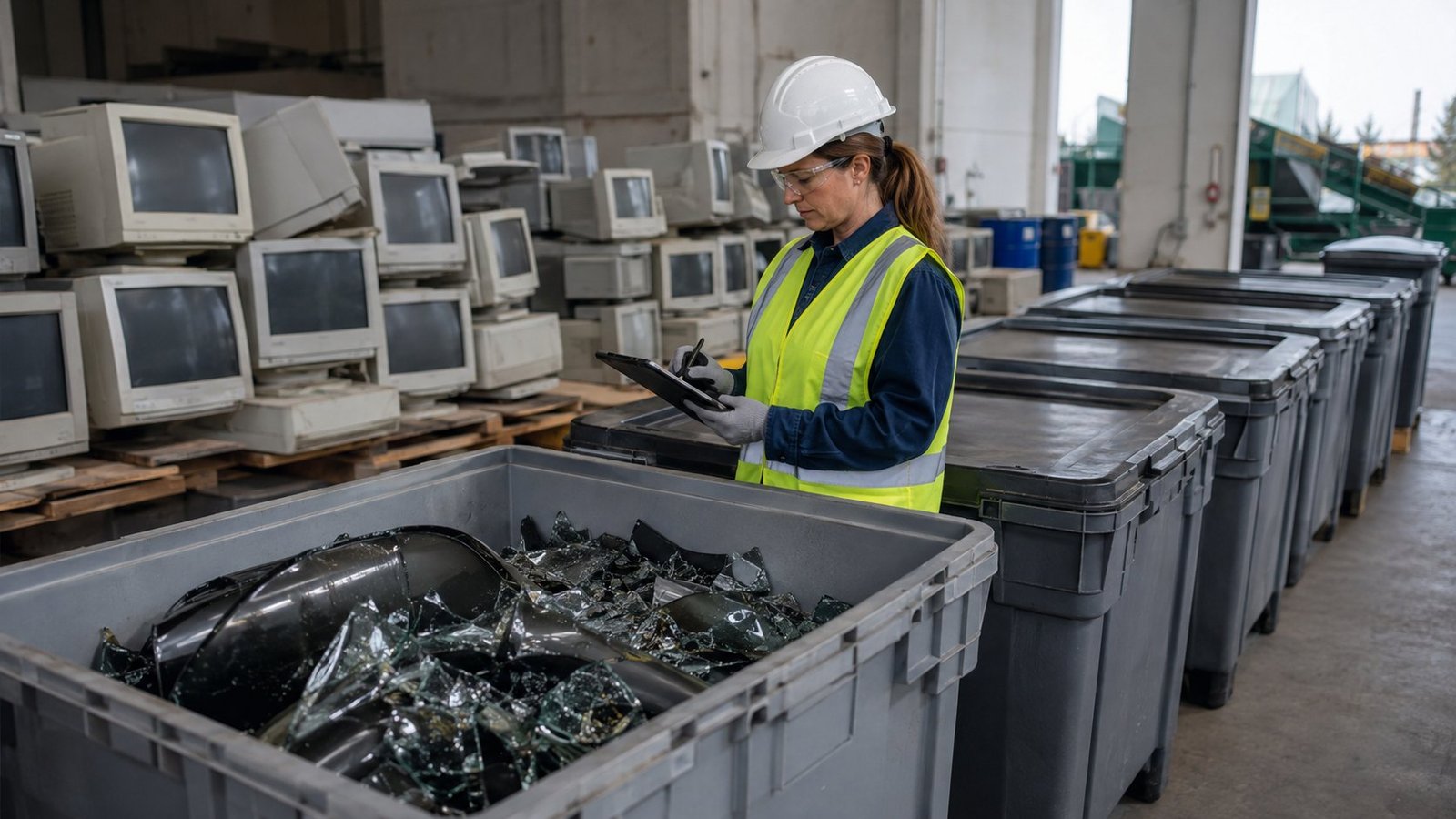
CRTs sent for disposal can be hazardous because of lead, while qualifying used CRTs and CRT glass sent for recycling may use conditional federal exclusions. Keep intact and broken CRTs controlled, prevent releases, meet labeling and speculative-accumulation conditions, verify recycler and export requirements, and check state e-waste and universal-waste rules for all electronics.
Classify the material and destination
Separate equipment for direct reuse, repair, parts harvesting, CRT recycling, other electronics recycling, and disposal. The regulatory result depends on condition and actual destination, not an e-waste label.
Control intact and broken CRTs
Broken CRTs need protective storage and transportation that minimizes releases of glass and fines, required labeling, compliant processing, and legitimate recycling. Intact CRTs must not be disposed or speculatively accumulated under the exclusion.
Track accumulation and movement
Maintain beginning inventory, receipts, shipments, weights or volumes, recycler acceptance, and evidence of feasible recycling. Apply the 75-percent speculative-accumulation calculation where required.
Worked example: warehouse cleanout
A facility separates working monitors for documented reuse, intact CRTs for recycling, broken CRTs in closed protective containers, flat-panel devices for a qualified e-waste recycler, and damaged batteries under their own rules.
Verify state and export controls
Many states regulate electronics more broadly or designate categories as universal waste. Exports of CRTs have EPA notice, consent, and record requirements.
Put the requirement into daily work
Assign an accountable owner and translate the CRT electronic waste recycling decision into a field standard. Identify who performs each step, who reviews exceptions, what training and equipment are required, and where evidence is retained. Test the workflow with a real facility example before broad use.
Connect environmental, operations, maintenance, laboratory, purchasing, shipping, emergency-response, and contractor roles where their decisions affect the outcome. Use clear acceptance criteria so the same facts produce the same decision.
Records and reevaluation triggers
Keep the current regulatory basis, facility analysis, approvals, operating records, and exception history under a stable identifier. A reviewer should be able to reconstruct what was known, who decided, how the control was implemented, and how ongoing performance was verified.
Reevaluate after changes in material, process, equipment, quantity, storage, handling, vendor, destination, permit, law, incident, inspection finding, analytical result, or recurring failure. Document both the trigger and the resulting decision.
Common mistakes
- Treating all electronics as federal universal waste.
- Commingling broken CRT glass with general e-waste.
- Stockpiling without tracking the recycling percentage.
- Using a reuse claim for nonfunctional equipment.
- Ignoring export and state program requirements.
Field checklist
- Inventory device type, condition, and destination.
- Separate reuse, repair, recycling, and disposal.
- Protect and label broken CRTs.
- Track speculative accumulation.
- Qualify domestic and export recyclers.
- Check state electronics and universal-waste rules.
Frequently asked questions
Are all electronics hazardous waste federally?
Are CRTs universal waste federally?
What is the recycling percentage test?
Check your state rules
Authorized states may be more stringent, broader in scope, or use different adoption and reporting rules. Verify current requirements and agency interpretations in every applicable jurisdiction.
Primary sources
Federal sources reviewed September 7, 2026. Verify the current text and the rules adopted in your jurisdiction before acting.
This article explains a general federal baseline. It is not a facility-specific determination or legal advice. Verify current federal, state, permit, and local requirements for your facts.