Academic Laboratory Hazardous Waste Under 40 CFR Part 262 Subpart K
Academic Laboratory Hazardous Waste Under 40 CFR Part 262 Subpart K
Explain the optional laboratory framework for eligible academic entities, including unwanted-material labels, removals, cleanouts, and laboratory management plans.
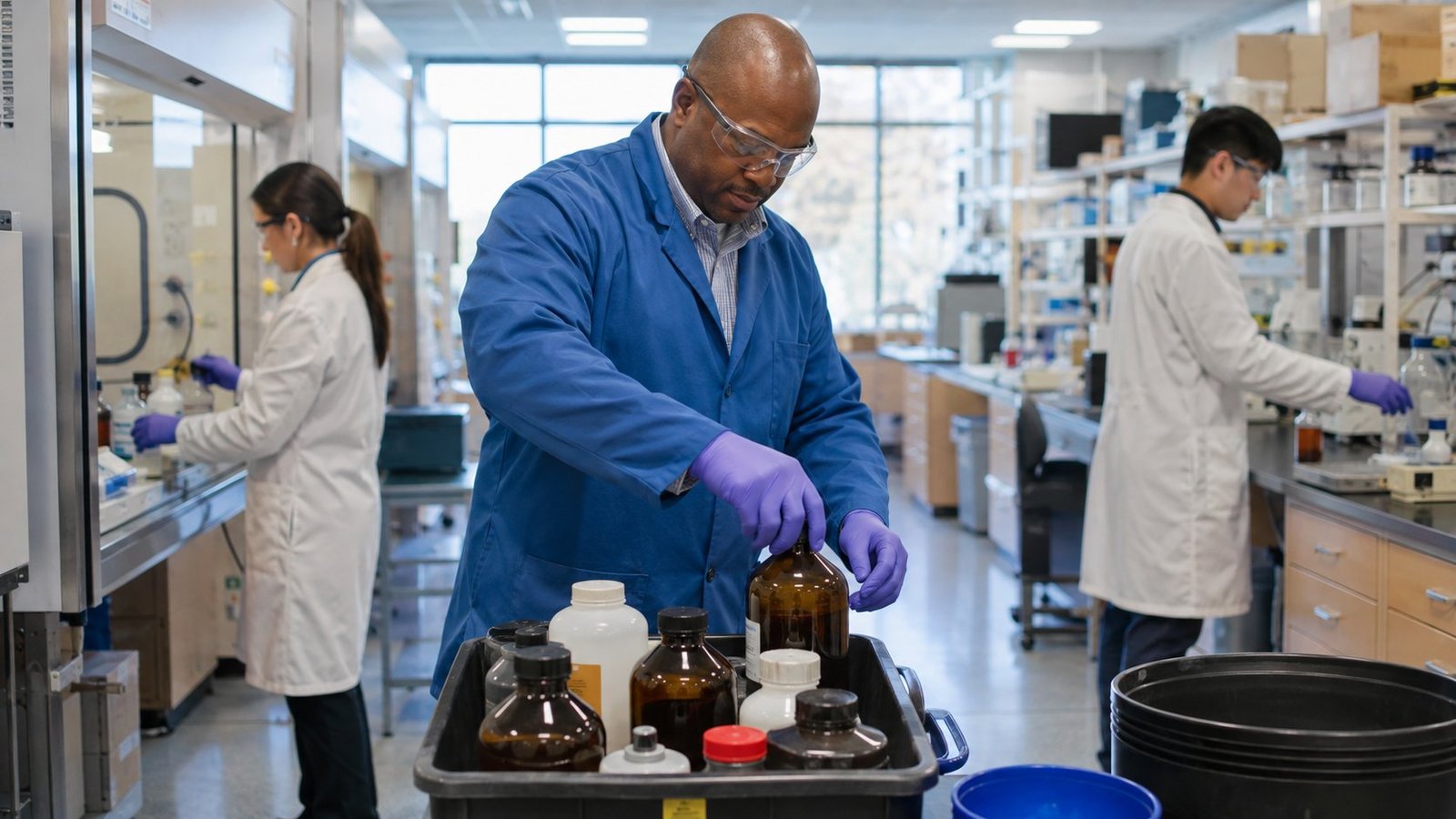
Subpart K is an optional alternative for qualifying laboratories at eligible academic entities where adopted by the state. An entity that opts in must notify, use consistent unwanted-material terminology, maintain container and emergency information, meet removal schedules, perform determinations at the allowed point, train laboratory personnel, and maintain a compliant Laboratory Management Plan.
Confirm entity and laboratory eligibility
Determine whether the institution and each covered space meet the regulatory definitions. Maintenance shops and other non-laboratory areas generally remain under standard generator rules even when laboratories use Subpart K.
Choose and document the program
Verify state adoption, make an institution-wide decision for laboratories under the EPA ID, submit notification, and create the two-part Laboratory Management Plan with enforceable and recommended procedures.
Control unwanted material
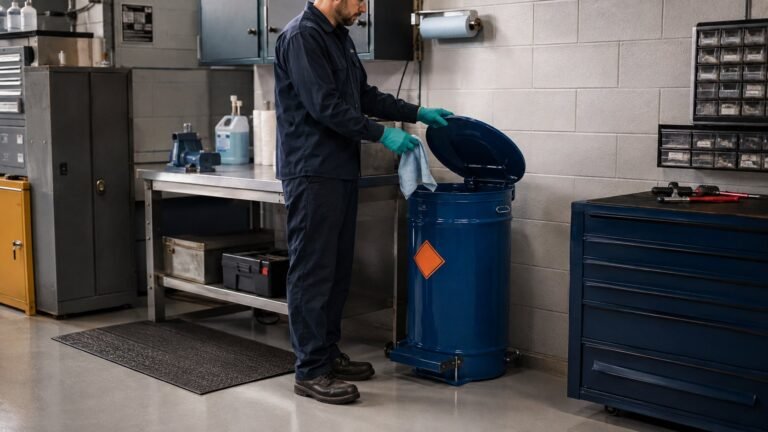
Use compatible, closed containers with wording that shows the material is unwanted and enough information for emergency responders and the later determination. Track when containers become full and removal timing.
Worked example: university research building
A university standardizes labels, trains graduate researchers, schedules routine pickups, creates a laboratory cleanout protocol, and routes non-laboratory maintenance waste through ordinary satellite accumulation rules.
Complete determinations and records
Make hazardous waste determinations at an allowable location and time, document removals, emergencies, cleanouts, training, and LMP reviews, and maintain the category calculation interface.
Put the requirement into daily work
Assign an accountable owner and translate the academic laboratory hazardous waste Subpart K decision into a field standard. Identify who performs each step, who reviews exceptions, what training and equipment are required, and where evidence is retained. Test the workflow with a real facility example before broad use.
Connect environmental, operations, maintenance, laboratory, purchasing, shipping, emergency-response, and contractor roles where their decisions affect the outcome. Use clear acceptance criteria so the same facts produce the same decision.
Records and reevaluation triggers
Keep the current regulatory basis, facility analysis, approvals, operating records, and exception history under a stable identifier. A reviewer should be able to reconstruct what was known, who decided, how the control was implemented, and how ongoing performance was verified.
Reevaluate after changes in material, process, equipment, quantity, storage, handling, vendor, destination, permit, law, incident, inspection finding, analytical result, or recurring failure. Document both the trigger and the resulting decision.
Common mistakes
- Opting in one laboratory but not others under the same EPA ID.
- Using vague labels such as spent without emergency information.
- Applying Subpart K to maintenance shops.
- Missing full-container removal timing.
- Failing to check optional state adoption.
Field checklist
- Confirm entity, laboratory, and state eligibility.
- Notify the implementing agency.
- Create and maintain the LMP.
- Standardize labels and container controls.
- Schedule removals and laboratory cleanouts.
- Train personnel and retain determinations.
Frequently asked questions
Is Subpart K mandatory for universities?
Does it cover every waste on campus?
Can waste codes be added later?
Check your state rules
Authorized states may be more stringent, broader in scope, or use different adoption and reporting rules. Verify current requirements and agency interpretations in every applicable jurisdiction.
Primary sources
- 40 CFR Part 262 Subpart K
- EPA – Academic Laboratory FAQs
- EPA – State Adoption of Academic Laboratory Rule
Federal sources reviewed September 7, 2026. Verify the current text and the rules adopted in your jurisdiction before acting.
This article explains a general federal baseline. It is not a facility-specific determination or legal advice. Verify current federal, state, permit, and local requirements for your facts.