Solvent-Contaminated Wipes: Using the Federal Exclusions Correctly
Solvent-Contaminated Wipes: Using the Federal Exclusions Correctly
Determine eligibility, control containers and dates, document no free liquids, and verify state adoption before using the wipes exclusions.
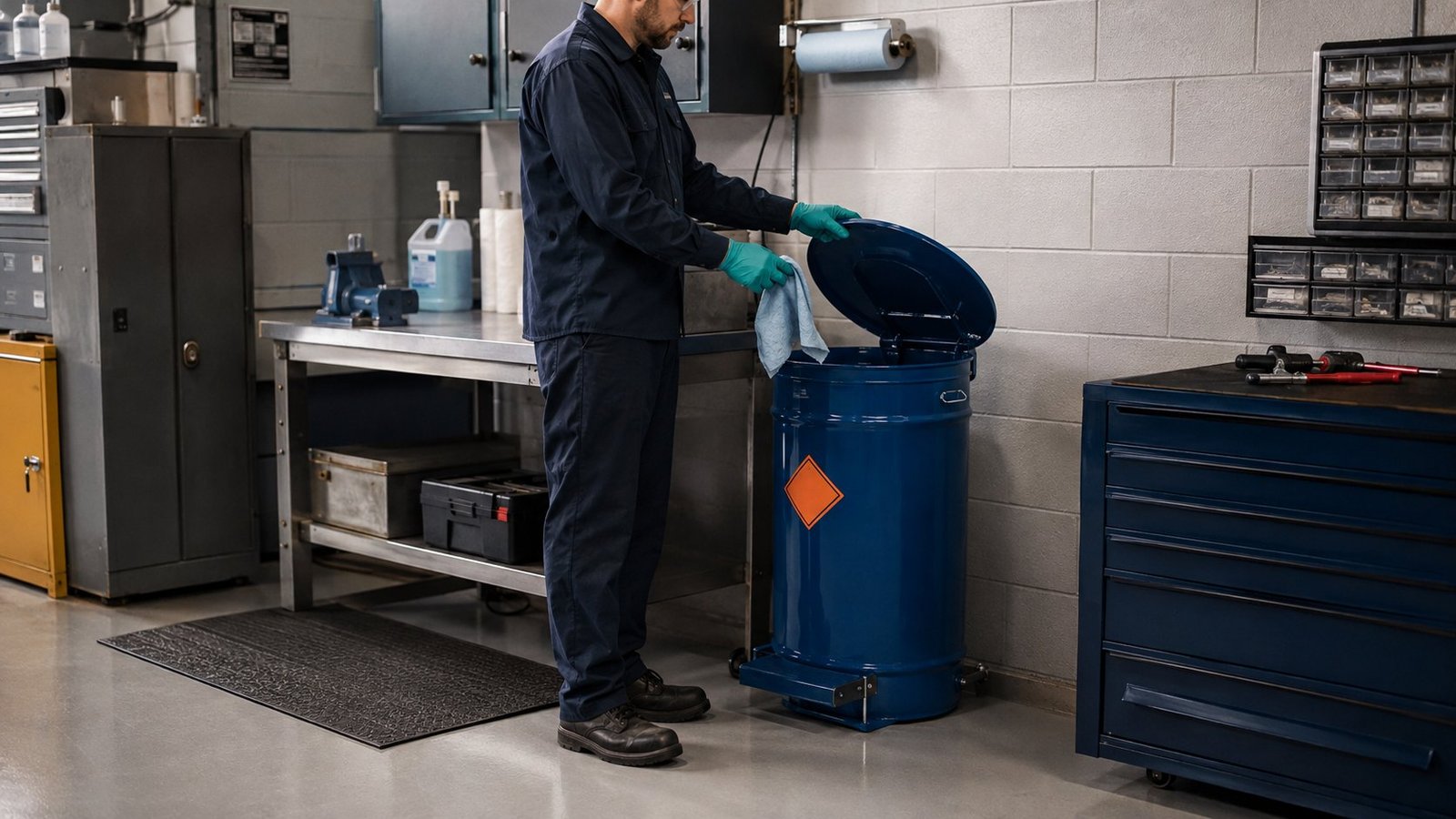
The federal wipes rule provides separate conditional exclusions for qualifying reusable wipes sent for cleaning and disposable wipes sent for approved disposal. Eligible wipes must meet solvent and contaminant limits, remain in closed non-leaking containers labeled “Excluded Solvent-Contaminated Wipes,” meet the 180-day limit, contain no free liquids before transport, go to an allowed destination, and have supporting records. Verify state adoption.
Confirm the material is an eligible wipe
Apply the regulatory definition and identify every contaminant. Wipes containing non-solvent listed hazardous waste or exhibiting toxicity, corrosivity, or reactivity from other contaminants are not eligible. Disposable wipes with trichloroethylene are excluded from the disposal pathway.
Control accumulation
Use non-leaking closed containers able to contain liquids, apply the required label, and date from the first wipe placed in each container. Multiple collection locations may be used under the wipe conditions.
Meet the no-free-liquids condition
Before transport, wipes and containers must have no free liquids. Document the process used to meet the condition. Manage removed liquids under applicable hazardous waste rules.
Worked example: maintenance wipe stations
A plant identifies approved solvent uses, supplies compatible self-closing containers, labels and dates each container, prohibits gloves and oil-only rags, trains staff, performs weekly checks, and sends reusable wipes to a qualifying laundry within 180 days.
Document destination and state status
Keep the name and address of the laundry, dry cleaner, landfill, or combustor; evidence of the accumulation limit; and the no-free-liquids process. Confirm the state has adopted the relevant federal exclusion and check destination conditions.
Put the requirement into daily work
Assign an accountable program owner and translate the solvent contaminated wipes exclusion decision into a written field standard. Identify who performs each step, who reviews exceptions, what tools and training they need, and where the resulting record is stored. Use clear acceptance criteria so operators, environmental staff, purchasing, shipping, and contractors reach the same conclusion.
Test the workflow with a real waste stream before broad rollout. Observe the work where it occurs, compare the record with field conditions, and correct gaps in equipment, layout, instructions, or responsibility. A technically correct procedure is not an effective control until people can follow it consistently.
Records and reevaluation triggers
Keep the source information, current regulatory basis, facility decision, approvals, and operating evidence together under a stable identifier. Records should allow a reviewer to reconstruct what was known, what decision was made, who made it, and how the facility confirmed ongoing performance.
Reevaluate the solvent contaminated wipes exclusion conclusion after changes in raw materials, process chemistry, equipment, waste composition, generation rate, storage, packaging, transporter, receiving facility, treatment method, permit conditions, or law. Also trigger review after a spill, rejected shipment, analytical anomaly, inspection finding, or recurring procedural failure.
Common mistakes
- Placing gloves or PPE in wipe containers.
- Mixing oil-only rags with qualifying solvent wipes.
- Leaving bags or lids open during accumulation.
- Missing the first-wipe accumulation date.
- Using the federal exclusion where the state has not adopted it.
Field checklist
- Inventory solvents and other contaminants.
- Verify each wipe and pathway is eligible.
- Confirm state adoption.
- Use closed non-leaking labeled containers.
- Track the 180-day accumulation limit.
- Document and verify no free liquids.
- Use an allowed destination and retain records.
Frequently asked questions
Can solvent wipes be thrown in ordinary trash?
Can a bag satisfy the closed-container condition?
Is the rule effective in every state?
Check your state rules
Authorized states may be more stringent, add state-only wastes or requirements, or decline to adopt less stringent federal provisions. Verify current rules and agency interpretations in every applicable jurisdiction.
Primary sources
- 40 CFR 261.4(a)(26) and (b)(18) — Wipes exclusions
- EPA — Solvent-Contaminated Wipes FAQs
- EPA — State Adoption of the Wipes Rule
Federal sources reviewed September 6, 2026. Verify the current text and the rules adopted in your jurisdiction before acting.
This article explains a general federal baseline. It is not a facility-specific determination or legal advice. Verify current federal, state, permit, and local requirements for your facts.