Satellite Accumulation Excess: The Three-Consecutive-Calendar-Day Workflow
Control satellite accumulation excess quantities through a documented three-consecutive-calendar-day workflow.

When an SQG or LQG exceeds 55 gallons of non-acute hazardous waste, one quart of liquid acute hazardous waste, or 1 kilogram of solid acute hazardous waste at a satellite accumulation area, 40 CFR 262.15 requires action within three consecutive calendar days. The generator must date the container holding the excess and either bring the excess under the applicable central-accumulation standards or remove it to an allowed onsite or offsite destination.
Identify the actual exceedance
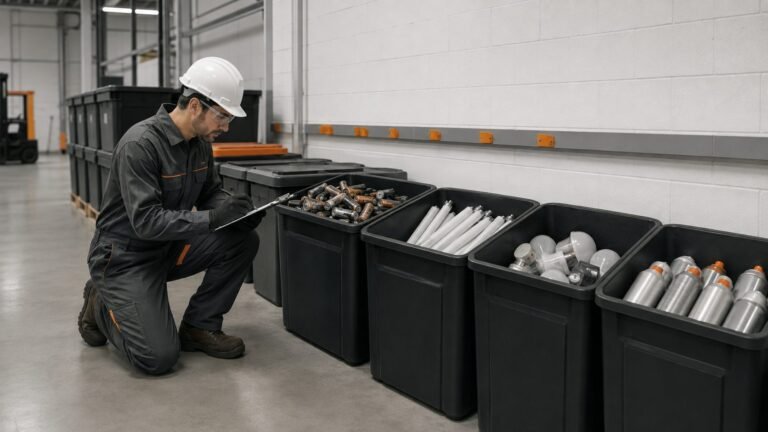
The federal satellite limit applies at each satellite accumulation area, not separately to each container or each compatible stream placed in that area. Inventory the total quantity managed in the SAA and distinguish non-acute, liquid acute, and solid acute hazardous waste.
The trigger is the time the quantity first exceeds the applicable limit. It is not the next business day, the next pickup date, or the day someone discovers the problem later. A weekend or holiday does not stop a period measured in consecutive calendar days.
Date the excess container immediately
Section 262.15 requires the container holding the excess to be marked or labeled with the date the excess amount began accumulating. That date documents the start of the three-day period. It is different from the central-accumulation start date that applies when a container enters the CAA.
A facility procedure should identify who recognizes the trigger, who dates the excess, and who verifies movement. A log can strengthen the evidence, but it does not replace the required date on the container holding the excess.
Choose one compliant pathway
Within three consecutive calendar days, the generator must either comply with the applicable SQG or LQG central-accumulation requirements or remove the excess to an onsite permitted or interim-status unit or an offsite designated facility. If the excess is moved to the CAA, apply the CAA accumulation-start date and the applicable container, marking, inspection, preparedness, and time-limit controls.
EPA guidance explains that only the excess must be removed under the federal trigger. A facility may choose to move the entire container as an operating practice, but it should distinguish that practice from the regulatory minimum.
Continue SAA controls during the three days
The SAA conditions do not disappear after the quantity limit is exceeded. During the three-day period, the generator must continue to meet the applicable container-condition, compatibility, closure, marking, and hazard-indication requirements. Emergency and preparedness provisions for the generator category also continue to apply.
Do not leave the excess in an open, leaking, incompatible, or unlabeled container while arranging movement.
Use a two-date workflow when moving to a CAA
EPA’s current generator FAQ distinguishes the date of SAA exceedance from the date the waste enters central accumulation. Date the excess container when the SAA limit is exceeded. When the container or excess reaches the CAA, apply the date that begins the 90-day LQG or 180-day SQG accumulation period.
If a container is moved to the CAA before the satellite limit is exceeded, it generally needs the CAA accumulation-start date when it arrives; there was no SAA excess date to record.
Investigate the cause
An exceedance may indicate an expected batch, a missed pickup, an unusually high generation rate, poor container sizing, duplicate SAAs, or a failure to monitor inventory. Record the immediate correction and decide whether container size, pickup frequency, staffing, visual controls, or escalation thresholds need adjustment.
Avoid using a routine target of exactly 55 gallons. Operating limits below the regulatory maximum create time to respond without an exceedance.
Keep evidence that closes the event
Retain the area, waste type, quantity, exceedance date and time, container identification, person who identified the trigger, destination, movement date, CAA start date where applicable, and any corrective action. Photographs can help when they do not expose sensitive information or substitute for required records.
Link the event to inspection findings, pickup records, inventory data, and training follow-up. Repeated events deserve a broader process review.
Field checklist
- Total the waste in each SAA using the applicable non-acute and acute limits.
- Mark the container holding the excess with the exceedance date.
- Notify the responsible environmental and operations owners.
- Select the CAA, onsite permitted unit, or offsite designated-facility pathway.
- Complete the move or applicable CAA compliance within three consecutive calendar days.
- Apply the separate CAA accumulation-start date when waste enters the CAA.
- Maintain SAA container, closure, compatibility, and marking controls during the period.
- Record quantity, dates, destination, responsible people, and proof of movement.
- Correct the cause and monitor for recurrence.
Frequently asked questions
Are the three days business days?
No. The federal text uses three consecutive calendar days.
Must the entire container leave the SAA?
The federal provision addresses the excess quantity. Moving the entire container may be a facility practice, but it should not be presented as the federal minimum without checking the applicable state rule.
When does the CAA clock begin?
When the waste enters central accumulation, apply the accumulation-start date required for the SQG or LQG CAA. EPA guidance treats that as distinct from the earlier SAA excess date.
Check your state rules
Authorized states may use different terminology, adopt more stringent limits, require additional records, or interpret movement and dating differently. Confirm the rule adopted where the SAA is located.
Primary sources
- 40 CFR 262.15 — Satellite accumulation areas
- EPA — Frequent questions about hazardous-waste generation
- EPA — Generator regulations compendium, satellite accumulation areas
Sources reviewed September 30, 2026. Verify the current text and the rules adopted in your jurisdiction before acting.
This article explains a general federal baseline. It is not a facility-specific determination or legal advice. Verify current federal, state, permit, and local requirements for your facts.