Hazardous Waste Containers: Selection, Condition, Closure, and Compatibility
Hazardous Waste Containers: Selection, Condition, Closure, and Compatibility
The operating decisions that keep drums, totes, and small containers compatible, closed, inspectable, and ready for safe handling.
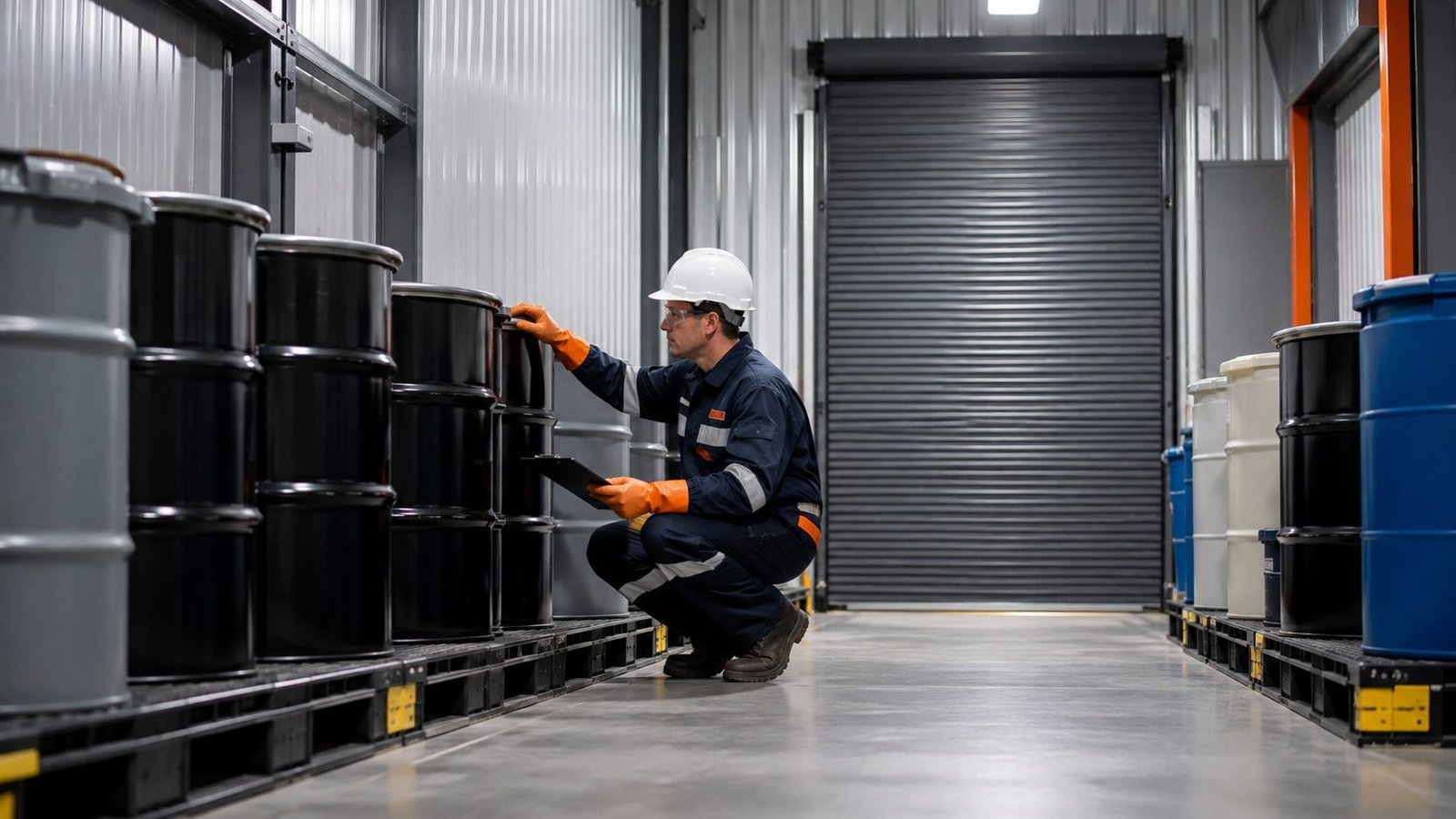
Use containers that are in good condition and compatible with the waste, keep them closed except when adding or removing waste or during allowed temporary operations, prevent incompatible materials from contacting one another, and correct leaks or deterioration immediately. The exact inspection and technical standards depend on the accumulation area, generator category, waste, and unit.
The container is part of the compliance system
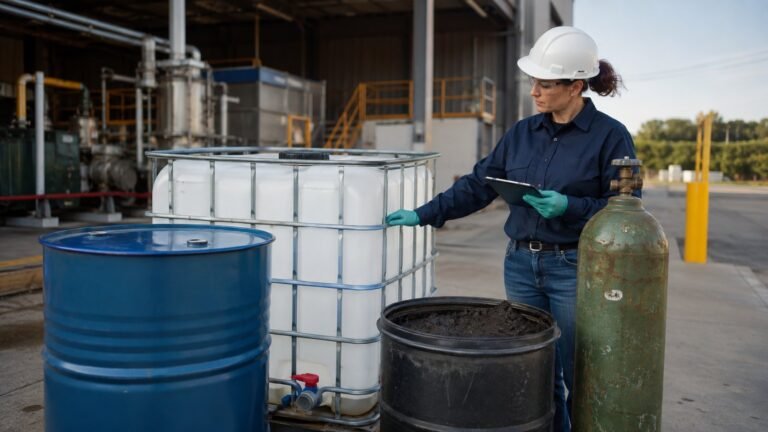
A drum is more than a place to put waste. Its material, liner, gasket, closure, fill level, location, and handling method control releases and employee exposure. The applicable federal conditions appear in the satellite and central accumulation rules, which incorporate container standards from 40 CFR Part 265.
Start by identifying where the container is managed: at the point of generation in a satellite accumulation area, in an SQG or LQG central accumulation area, or under another standard. The setting determines which conditions apply.
Select the container from the waste outward
Document the waste’s composition, concentration, pH, solvent effects, oxidizing or reducing properties, water reactivity, temperature, vapor pressure, and expected storage time. Then evaluate the container body, liner, gasket, fittings, pressure behavior, and handling risks.
Steel may be suitable for many solvent or paint wastes but unsuitable for an acid that attacks metal. Polyethylene may resist many acids and caustics but be weakened or permeated by some solvents. A general compatibility chart is a screening tool; use chemical-specific information and account for mixtures, temperature, and concentration.
Shipment packaging is a separate decision. A container that is acceptable for onsite accumulation is not automatically an authorized DOT package or acceptable to the receiving facility.
Control condition and closure every day
Watch for corrosion, bulging, cracks, damaged seams, leaking valves, missing closures, residue around bungs, staining underneath, pressure, unusual heat, and impact damage. If a container leaks or is not in good condition, trained personnel must transfer or otherwise manage the waste in compliance with the applicable requirements. Absorbent placed beneath a failing drum is not a repair.
Containers must generally remain closed during accumulation except when waste is being added or removed. The SAA rule also allows limited temporary venting when necessary for proper equipment operation or to prevent dangerous situations such as pressure buildup. Funnels, valves, and lids must function as part of a closed system when not actively in use.
Keep incompatible materials separated
Do not place incompatible wastes in the same container if the combination could create heat, pressure, fire, explosion, corrosion, violent reaction, or uncontrolled toxic mist, fumes, dust, or gases. Separate or protect a container from nearby incompatible materials as the applicable rule requires.
Examples that deserve careful evaluation include acids with cyanide- or sulfide-bearing wastes, oxidizers with organics, water-reactive materials with water, acids with caustics, and strong oxidizers with reducing agents. The list is illustrative. Base segregation on the actual chemistry, not department names such as “lab waste.”
Worked example: the corroding acid drum
Simplified example. An operator finds wet staining at the bottom seam of a steel drum used for acidic waste. The area owner stops additions, controls access, evaluates the hazard, and has trained personnel transfer or overpack the material using compatible equipment. The facility inspects neighboring containers and the containment area, documents the corrective action, and evaluates whether a release occurred.
The investigation shows that a purchasing substitution changed the waste concentration. Management of change had not routed the new product to the waste-program owner. The corrective action therefore includes a revised container specification and a purchasing trigger, not just replacement of one drum.
Use inspections to close the loop
Central accumulation container areas generally require inspections at least weekly under the incorporated federal container provisions. Satellite accumulation areas do not carry that same federal weekly-inspection provision, although routine checks can be a sound operating control and a state may require more.
An inspection should identify the unit and date, name the inspector, examine containers and the surrounding area, record findings, assign corrective actions, document completion, and escalate conditions that threaten release or safety. A string of perfect checkmarks is not evidence that problems were fixed.
Common container mistakes
- Choosing a container because it is available rather than compatible.
- Leaving a funnel or bung open between additions.
- Using one collection container for chemically incompatible wastes.
- Ignoring residue, bulging, corrosion, or staining until shipment day.
- Assuming secondary containment makes a leaking container acceptable.
- Applying an SAA practice to a CAA without checking the applicable section.
- Assuming onsite suitability proves DOT packaging compliance.
Field checklist
- Identify the accumulation setting and generator category.
- Confirm the waste determination before selecting a container.
- Verify compatibility of body, liner, gasket, fittings, and closure.
- Keep the container closed when waste is not being added or removed.
- Maintain safe headspace and prevent overfilling.
- Segregate incompatible wastes and nearby materials.
- Inspect for corrosion, leaks, residue, damage, pressure, and heat.
- Correct defects promptly and document the cause and response.
- Reevaluate the container specification when process inputs change.
- Perform a separate DOT packaging review before shipment.
Frequently asked questions
Does a screw-cap funnel count as closed?
Are weekly inspections required at satellite accumulation areas?
Can a leaking drum stay in place if it is inside containment?
Check your state rules
States may add secondary-containment, aisle-space, inspection, closure, seismic, fire-code, or documentation requirements. Permits and local fire authorities can also impose site-specific controls.
Primary sources
- 40 CFR 262.15 — Satellite accumulation
- 40 CFR 262.16 — SQG accumulation conditions
- 40 CFR 262.17 — LQG accumulation conditions
- 40 CFR Part 265, Subpart I — Use and management of containers
Federal sources reviewed September 6, 2026. Verify the current text and the rules adopted in your jurisdiction before acting.
This article explains a general federal baseline. It is not a facility-specific determination or legal advice. Verify current federal, state, permit, and local requirements for your facts.