Wastewater Treatment Unit Exemption Documentation Checklist
Build a unit-specific record that tests the federal definition, establishes the Clean Water Act connection, marks the physical boundary, and addresses residues and change control.

The wastewater treatment unit exemption is unit-specific. A defensible file should show that the device meets the regulatory definition of a tank or tank system, is part of a wastewater treatment facility subject to Clean Water Act section 402 or 307(b), and receives, treats, or stores qualifying hazardous wastewater or wastewater-treatment sludge. The file should also identify equipment and waste outside the exemption, explain how removed residues are managed, and list changes that require reevaluation.
Document the regulatory elements
Start with the current federal definition of “wastewater treatment unit” in 40 CFR 260.10 and the related exemptions in 40 CFR 264.1(g)(6) and 265.1(c)(10). Avoid beginning with a conclusion that an entire treatment system is exempt. Test each device and each element of the definition.
- Record the legal citations and the date reviewed.
- Identify the device and document whether it meets the regulatory definition of a tank or tank system.
- Document the wastewater treatment facility connection to Clean Water Act section 402 or 307(b).
- Identify the qualifying hazardous influent wastewater or wastewater-treatment sludge received, treated, or stored.
- Describe the operational function of each tank and connected component.
The exemption addresses specified RCRA treatment, storage, and disposal facility standards. It is not a conclusion that the wastewater, unit, residues, or facility are outside every environmental requirement.
Draw the physical boundary
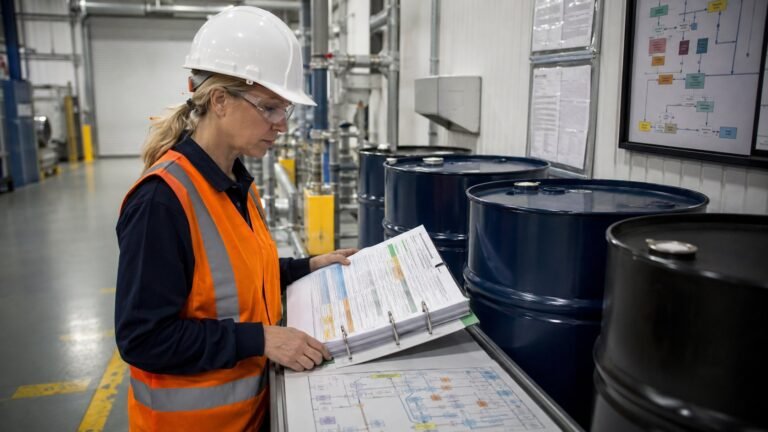
Create a flow diagram showing generating processes, collection points, sumps, piping, equalization, treatment tanks, presses, filters, sludge handling, discharge points, temporary equipment, and off-line storage. Mark each component as included, excluded, or requiring further review.
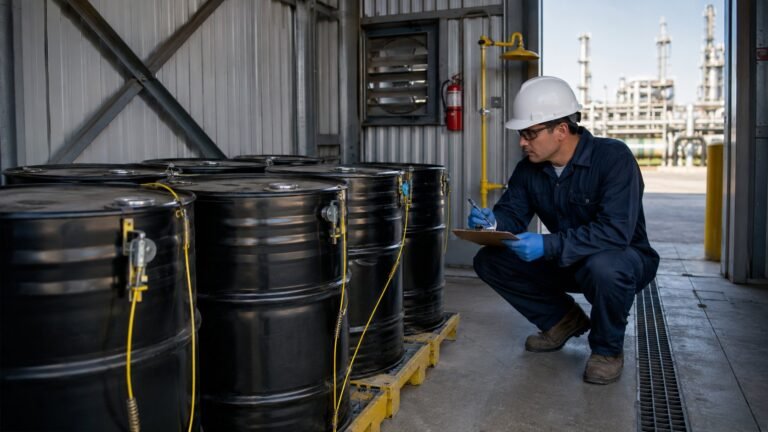
A system-wide label is not enough when individual containers, storage tanks, product tanks, or residual-management areas may fall outside the unit definition. Photographs, equipment identifiers, piping and instrumentation diagrams, operating descriptions, and a current equipment list can help a reviewer match the written conclusion to the actual system.
Record how intermittent connections, portable tanks, bypass piping, maintenance configurations, and disconnected equipment are treated in the analysis.
Establish the Clean Water Act connection
Keep the current permit, pretreatment agreement, control mechanism, or other documentation supporting the Clean Water Act section 402 or 307(b) element. Identify the discharge point, treatment facility, and units covered by that authority.
EPA interpretive materials explain that an actual permit or numerical effluent limit is not necessarily required for a discharge to be “subject to” the Clean Water Act, but a statement that water eventually reaches a sewer does not by itself establish every element of the RCRA definition. Document the actual regulatory pathway and confirm current state and local requirements.
Separate wastewater from concentrated or nonaqueous waste
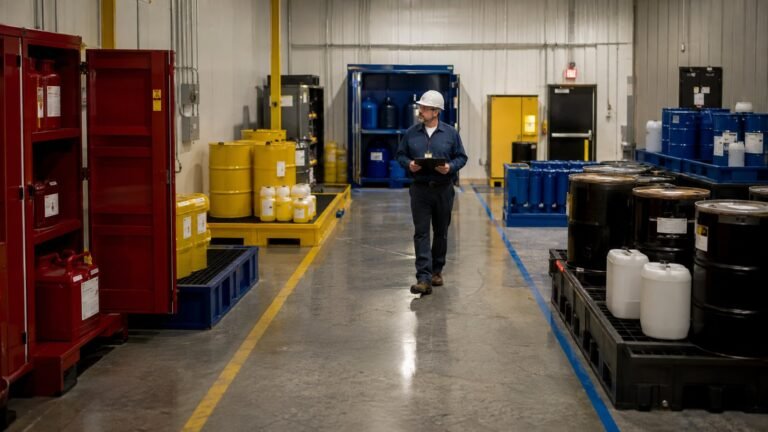
Describe the source, composition, flow, and function of each incoming stream. Identify concentrated chemicals, unused products, off-specification materials, nonaqueous waste, hauled waste, and other feeds that require separate analysis. Document the point at which a material becomes wastewater and the evidence supporting that description.
Historical EPA guidance distinguishes wastewater from concentrated chemicals and nonaqueous wastes. Treat that guidance as interpretive material and use the current regulatory text, authorized-state requirements, and site facts as the controlling framework.
Manage removed residues separately
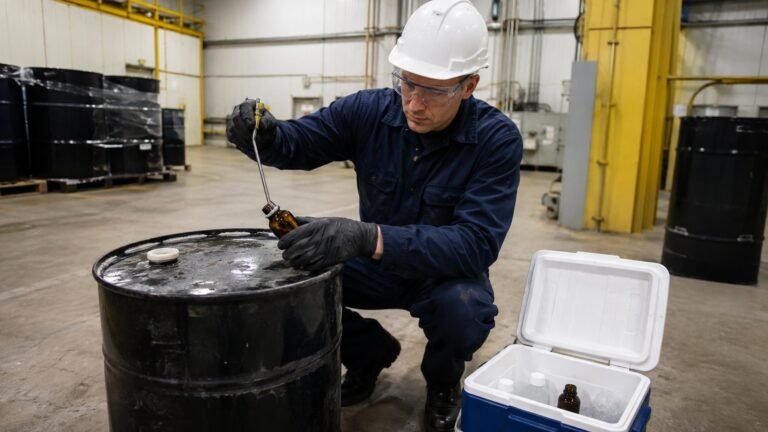
The unit exemption does not automatically exempt filter cake, sludge, spent media, screenings, debris, or other removed residues. Make and retain the applicable hazardous-waste determination for each residual stream.
Link each determination to the accumulation, marking, land-disposal-restriction, shipment, and recordkeeping controls that apply after removal. Keep the sample identity, analytical or knowledge basis, responsible reviewer, and reevaluation triggers connected to the residual record.
Related HazWastePros references include the wastewater treatment unit exemption overview, hazardous-waste determination guide, and generator land-disposal-restriction guide.
Define reevaluation triggers
Review the file after changes in process chemistry, production, influent composition or flow, treatment chemicals, tanks, piping, filters, presses, temporary equipment, discharge permits, pretreatment requirements, bypasses, diversions, off-line storage, residual characteristics, regulatory text, state adoption, agency interpretation, spills, inspections, or recurring operating failures.
Record the trigger, date, reviewer, evidence considered, decision, and resulting control changes. A stable change-control record prevents an old conclusion from being applied to a materially different system.
Field checklist
- Current regulatory citations and review date
- Clean Water Act permit, pretreatment, or other regulatory basis
- Flow diagram and unit-boundary map
- Equipment list and unit functions
- Influent descriptions and waste determinations
- Included, excluded, and unresolved component table
- Residual and sludge determinations
- Related RCRA, air, LDR, release, and state-rule review
- Change-control and reevaluation record
- Responsible owner and controlled document location
Frequently asked questions
Is an entire wastewater treatment system automatically exempt?
Does sewer discharge alone establish the exemption?
Are filter cake and sludge automatically exempt?
Check your state rules
Authorized states may implement the federal baseline differently or impose more stringent requirements. Confirm current state regulations, permit conditions, pretreatment requirements, and agency interpretations for the applicable jurisdiction.
Primary sources
- 40 CFR 260.10 – Wastewater treatment unit definition
- 40 CFR 264.1(g)(6) – Permitting exemption
- 40 CFR 265.1(c)(10) – Interim-status exemption
- EPA RCRA Online 11020 – Interpretive guidance on wastewater treatment units
- EPA RCRA Online 13112 – Historical interpretive memorandum
Sources reviewed September 28, 2026. Verify the current text and the rules adopted in your jurisdiction before acting.
This article explains a general federal baseline. It is not a facility-specific determination or legal advice. Verify current federal, state, permit, and local requirements for your facts.