Shipping Hazardous Waste: How RCRA and DOT Requirements Fit Together
Shipping Hazardous Waste: How RCRA and DOT Requirements Fit Together
A coordinated workflow for waste status, transporter and destination selection, DOT classification, packaging, communication, and final release.

Before offering hazardous waste for transport, confirm the RCRA determination and codes, use authorized handlers and destination facilities, independently classify the material under DOT rules, select authorized packaging, prepare the manifest and shipping description, apply required marks and labels, provide emergency information, and have trained personnel perform and verify each regulated function.
One shipment, two primary rule systems
EPA’s RCRA program controls hazardous waste identification, generator management, manifests, land disposal restrictions, and cradle-to-grave tracking. DOT’s hazardous materials regulations control transportation classification, packaging, hazard communication, security, and hazmat employee training.
A waste code does not create a DOT shipping description. An SDS transportation section may provide clues but does not replace the shipper’s classification. A vendor profile or acceptance email does not replace either analysis.
Use a controlled shipment workflow
- Confirm the waste. Verify the current determination, composition range, physical state, codes, quantity, and container history.
- Confirm the parties. Verify the transporter’s and receiving facility’s authorization, EPA identification information, service scope, and acceptance.
- Classify under DOT. Determine whether the material is a hazardous material and identify hazard class or division, packing group when applicable, proper shipping name, identification number, subsidiary hazards, hazardous substance or marine pollutant status, and reportable quantity notation.
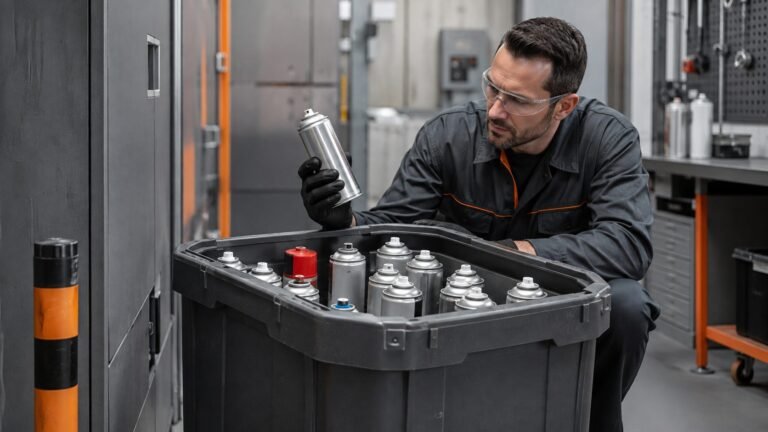
- Select and inspect packaging. Match the classification and quantity to an authorized package and closure instructions. Inspect condition, compatibility, fill limits, and securement.
- Prepare communication. Complete the manifest and shipping paper information, marks, labels, placards, and emergency response information that apply.
- Verify and release. A trained employee compares the package, documents, approvals, and vehicle before signature and tender.
Train every hazmat employee by function
DOT hazmat employees need general awareness and familiarization, function-specific, safety, and security awareness training. In-depth security training applies when the employer must maintain a security plan. Initial training is generally required within 90 days of employment or a change in job function; before completion, the employee may perform the function only under direct supervision of a properly trained and knowledgeable employee. Recurrent training is generally required at least once every three years.
Training records identify the employee, most recent completion date, training materials or location, trainer, and certification that the employee was trained and tested. Keep them for the period required by 49 CFR 172.704.
Worked example: spent solvent shipment
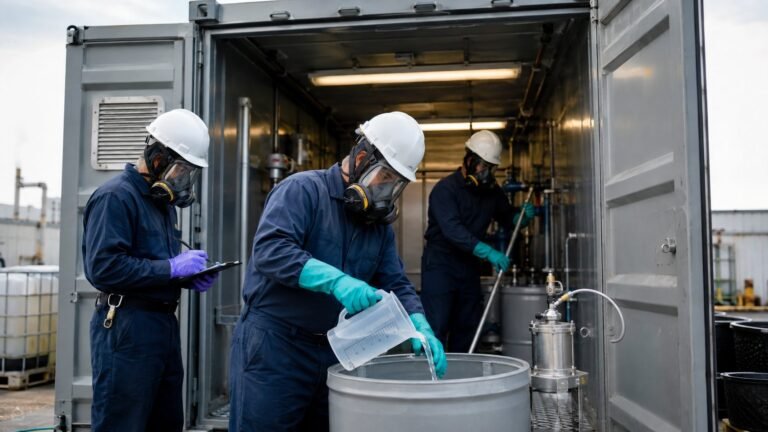
Simplified example. A facility prepares drums of listed ignitable spent solvent. The environmental specialist confirms the RCRA determination and LDR information. A DOT-trained shipper uses composition and hazard data to select the proper shipping description and authorized packaging, then verifies closures, marks, labels, manifest entries, emergency information, transporter, and destination.
During review, the shipper finds that the new formulation changed flash point and composition. The shipment is held while both the waste determination and DOT classification are reevaluated. Holding the load is a functioning control, not a failure.
Create a final release gate
Use an independent checklist before the vehicle leaves. Compare the current waste profile and analysis with the container; confirm counts and quantities; inspect package condition and closures; verify the manifest, shipping description, marks, labels, placards, and emergency response information; and confirm signatures and copies.
Document who prepared and who verified the shipment. Define stop-work authority for discrepancies, damaged packages, rejected loads, or facts outside the profile.
Common shipping mistakes
- Copying last shipment’s description without checking current facts.
- Using a waste code or SDS as the DOT classification.
- Selecting packaging from habit rather than authorization and closure instructions.
- Allowing an untrained employee to sign or prepare regulated information.
- Failing to reconcile labels and marks with the shipping paper.
- Ignoring hazardous substance, marine pollutant, subsidiary hazard, or special-provision questions.
- Tendering a load before destination acceptance is final.
Field checklist
- Verify waste determination, codes, composition, state, and quantity.
- Confirm transporter and receiving-facility authorization and acceptance.
- Complete an independent DOT classification.
- Select authorized, compatible packaging and follow closure instructions.
- Inspect packages before loading.
- Prepare the manifest and applicable shipping-paper entries.
- Apply required marks, labels, placards, and emergency information.
- Verify hazmat employee training and records.
- Use a second-person release check for complex shipments.
- Retain documents and track the shipment to closure.
Frequently asked questions
Is every RCRA hazardous waste a DOT hazardous material?
Can a waste broker sign the manifest for the generator?
How often is DOT hazmat training required?
Check your state rules
State waste rules, motor-carrier requirements, permits, and facility acceptance criteria can add steps. Transport by highway, rail, vessel, or air may involve additional modal provisions.
Primary sources
- 40 CFR Part 262, Subpart B — Manifest requirements
- 40 CFR Part 262, Subpart C — Pre-transport requirements
- 49 CFR 172.101 — Hazardous Materials Table
- 49 CFR 172.704 — Training requirements
- 49 CFR Part 173 — Shippers and packagings
Federal sources reviewed September 6, 2026. Verify the current text and the rules adopted in your jurisdiction before acting.
This article explains a general federal baseline. It is not a facility-specific determination or legal advice. Verify current federal, state, permit, and local requirements for your facts.