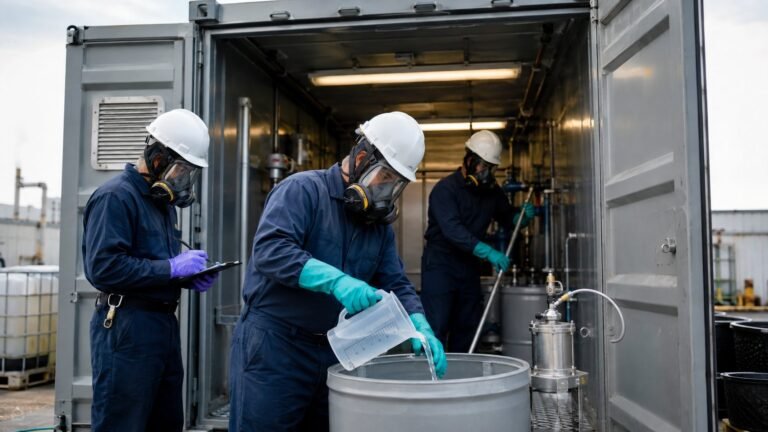
Aerosol Cans as Universal Waste: Puncturing, Accumulation, and State Adoption
Aerosol Cans as Universal Waste: Puncturing, Accumulation, and State Adoption
How to distinguish intact, leaking, and empty cans; evaluate puncturing; control captured residues and vapors; and check state adoption before treatment.
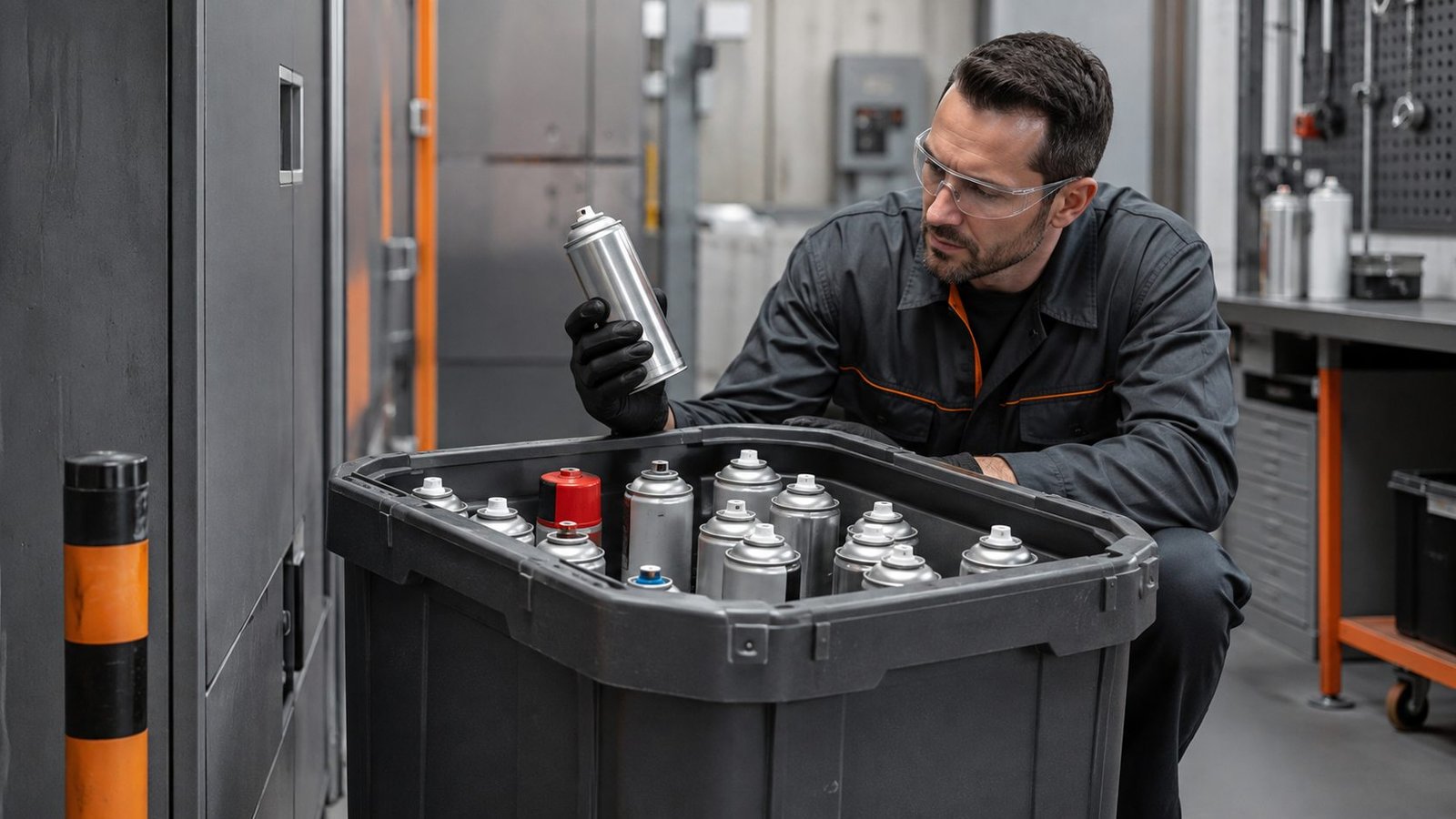
Eligible aerosol cans can be managed as universal waste under federal Part 273, but state adoption must be confirmed. Protect intact cans from damage and heat, label and date the accumulation, contain leaking cans, and puncture only when the handler follows the specific device, procedure, training, spill-control, and residue-management conditions. Captured contents require a separate hazardous waste determination.
Confirm eligibility and state adoption first
The federal definition covers an intact container in which gas under pressure propels a liquid, paste, or powder through a self-closing valve. The rule excludes aerosol cans that meet the empty-container standard in 40 CFR 261.7. The universal-waste pathway applies only when the can and management meet Part 273.
Because universal-waste rules are implemented through authorized state programs, confirm whether the state adopted aerosol cans and whether it changed puncturing, notification, labeling, or management conditions. If the pathway is unavailable, make an ordinary hazardous waste determination.
Separate intact, damaged, and leaking cans
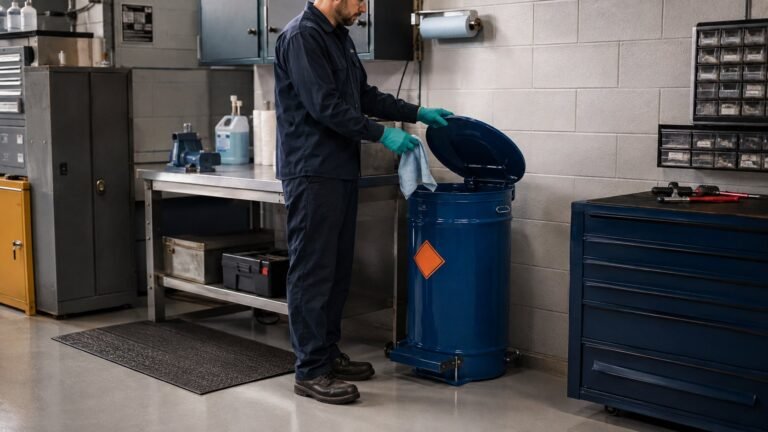
Manage intact cans to prevent release, fire, and physical damage. Accumulate them in a compatible container or other unit that meets the rule, use an allowed universal-waste marking, and demonstrate accumulation time.
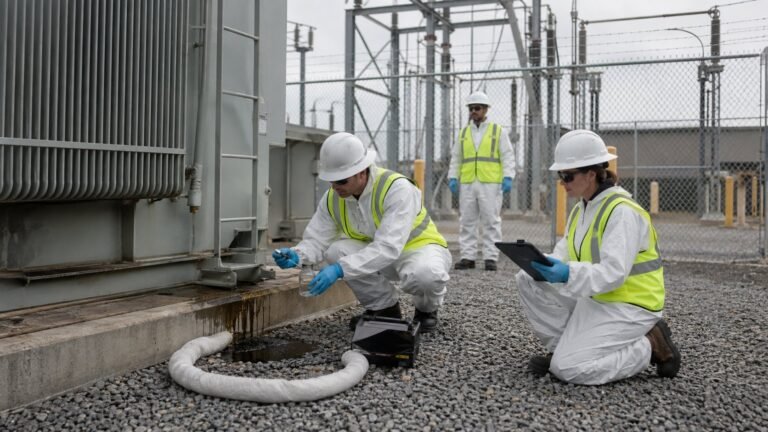
A leaking can must be packaged in a separate closed container, overpacked with absorbents, or immediately emptied into another container as allowed by the applicable provision. The container must be compatible and capable of preventing release. Determine escaped contents, absorbents, filters, and cleanup debris separately.
Treat puncturing as a controlled operation
A handler that punctures and drains aerosol cans must use a commercial device designed to safely puncture cans and effectively contain residual contents and emissions. The device must be operated according to the manufacturer’s instructions. Establish a written procedure, train employees, maintain a spill cleanup kit, and ensure a spill or leak cleanup plan is in place.
The operation must puncture each can so its contents are removed, and the handler must transfer the contents promptly to a compatible container or tank. Conduct a hazardous waste determination on the collected contents and manage them under the applicable requirements. Recycle the empty cans when using this universal-waste puncturing provision.
Control fire, vapor, compatibility, and worker hazards
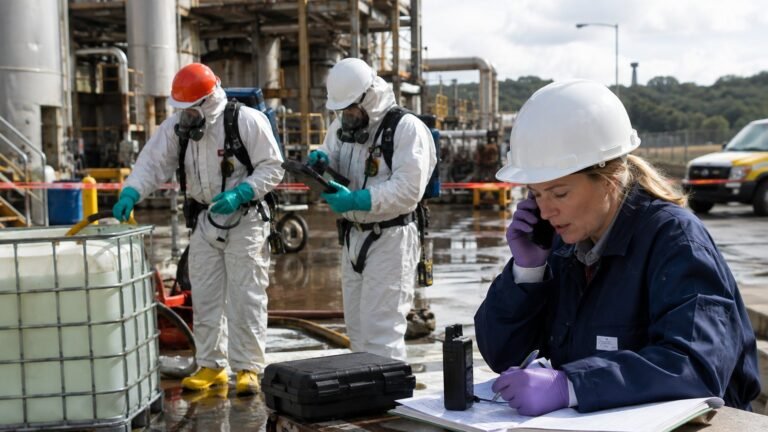
Aerosol cans may contain ignitable liquids, compressed gases, toxic ingredients, corrosives, or incompatible products. Evaluate ventilation, ignition control, static and bonding needs, equipment compatibility, personal protective equipment, emergency shutdown, and local fire-code or air-permit conditions.
Do not puncture a severely damaged, unknown, incompatible, or unsafe can just to call it empty. Define prohibited cans and an escalation path. Grouping all cans as “paint” or “maintenance” does not establish chemical compatibility.
Worked example: a hissing can in the collection drum
Simplified example. An operator hears a can leaking inside a collection drum. Trained personnel isolate ignition sources, follow the emergency procedure, and place the can in compatible closed containment. They recover free liquid and manage absorbents while the environmental owner determines their status.
The team does not put the damaged can through the puncturing device. It records the incident, identifies the source department, checks other cans, and improves incoming screening and the damaged-can station.
Document the full material path
Keep state-adoption research, handler category, labels and dating method, employee training, written puncturing procedure, device instructions, maintenance, incident records, residue determinations, destination approvals, and shipment records.
Before transport, evaluate DOT requirements for pressurized cans, captured liquids, and damaged packages. Universal-waste transporter provisions do not answer every hazardous-material transportation question.
Common aerosol-can mistakes
- Assuming every aerosol can is universal waste.
- Using the federal rule in a state that has not adopted it.
- Failing to segregate leaking or severely damaged cans.
- Puncturing with an improvised device.
- Operating without written procedures, training, or spill equipment.
- Leaving captured residues in an open container.
- Failing to determine the captured contents.
- Ignoring vapor, fire-code, air, and DOT requirements.
Field checklist
- Verify the can meets the federal definition and is not already empty.
- Confirm state adoption and any added conditions.
- Determine handler category and accumulation time controls.
- Label the collection unit with allowed universal-waste wording.
- Separate intact, leaking, damaged, incompatible, and unknown cans.
- Use only a qualifying commercial puncturing device.
- Maintain written procedures, training, and spill-control equipment.
- Capture contents and emissions effectively.
- Determine and manage residues separately.
- Recycle emptied cans and verify DOT shipment requirements.
Frequently asked questions
Can every facility puncture universal waste aerosol cans?
Are punctured cans automatically unregulated?
Can leaking aerosol cans stay with intact cans?
Check your state rules
Some states have not adopted the federal aerosol-can category or impose additional treatment, air, fire-code, notification, or transporter controls. Verify the current state rule before collecting or puncturing cans.
Primary sources
- 40 CFR 273.6 — Applicability for aerosol cans
- 40 CFR 273.9 — Definition of aerosol can
- 40 CFR 273.13(e) — Small handler aerosol-can standards
- 40 CFR 273.33(e) — Large handler aerosol-can standards
- EPA — Universal waste aerosol cans
Federal sources reviewed September 6, 2026. Verify the current text and the rules adopted in your jurisdiction before acting.
This article explains a general federal baseline. It is not a facility-specific determination or legal advice. Verify current federal, state, permit, and local requirements for your facts.